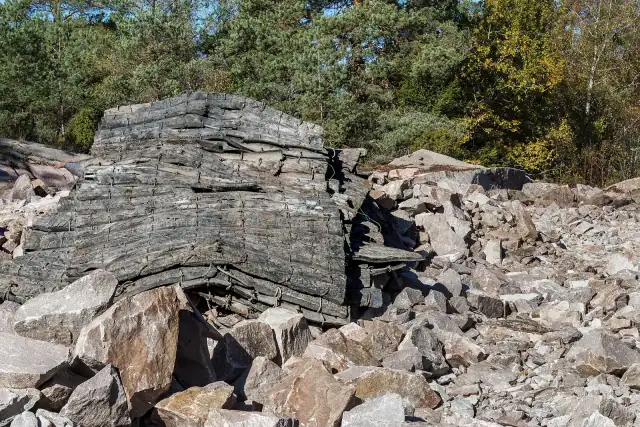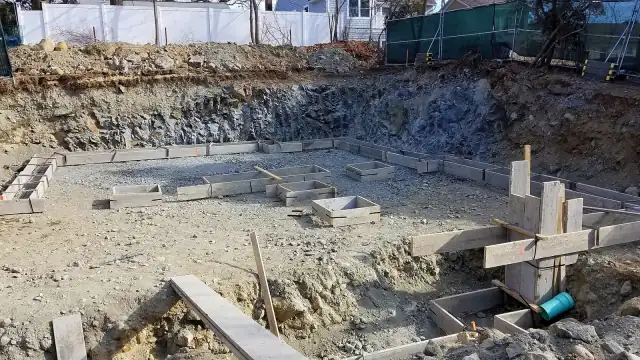
Radon and arsenic come out of New Hampshire’s granite, and most new houses here sit on both. NH DHHS reports that 39% of homes tested from 2007 to 2025 had indoor radon at or above the EPA’s 4 pCi/L action level, and NHDES estimates that 25 to 30% of private wells have arsenic at 5 parts per billion or more. The state building code does not require radon-resistant construction, so it is up to you and your builder. The cheap moves are to build in a passive radon pipe for a few hundred dollars, test the new well before you plumb the treatment, and test the finished house after you move in.
How common is radon in New Hampshire homes?
Very common. The state’s radon program puts the average indoor level in New Hampshire at an estimated 5.9 pCi/L, compared with 1.3 pCi/L nationally, and counts 152 towns whose average test result is above 4 pCi/L (NH DHHS radon data brief, July 2026). Results above 100 pCi/L have been reported in every county.
| Measure | Result | Source |
|---|---|---|
| Homes tested at or above 4 pCi/L, 2007-2025 | 39% | NH DHHS, 2026 |
| Estimated average indoor radon, NH vs. US | 5.9 vs. 1.3 pCi/L | NH DHHS, 2026 |
| Share of NH homes ever tested | fewer than 10% | NH DHHS, 2026 |
| Coos County tests at or above 4 pCi/L, 1988-2011 | 39% (median of elevated tests 9.8 pCi/L) | NH EPHT, 2016 |
| Grafton County tests at or above 4 pCi/L, 1988-2011 | 22% (median of elevated tests 6.7 pCi/L) | NH EPHT, 2016 |
County figures are from the state tracking program’s 2016 radon spotlight, the most recent county table we could read. These are homes whose owners chose to test, not a random sample. DHHS also notes that Coos County has several communities where more than half of tested homes were elevated, and that Coos had one of the lowest testing rates in the state.
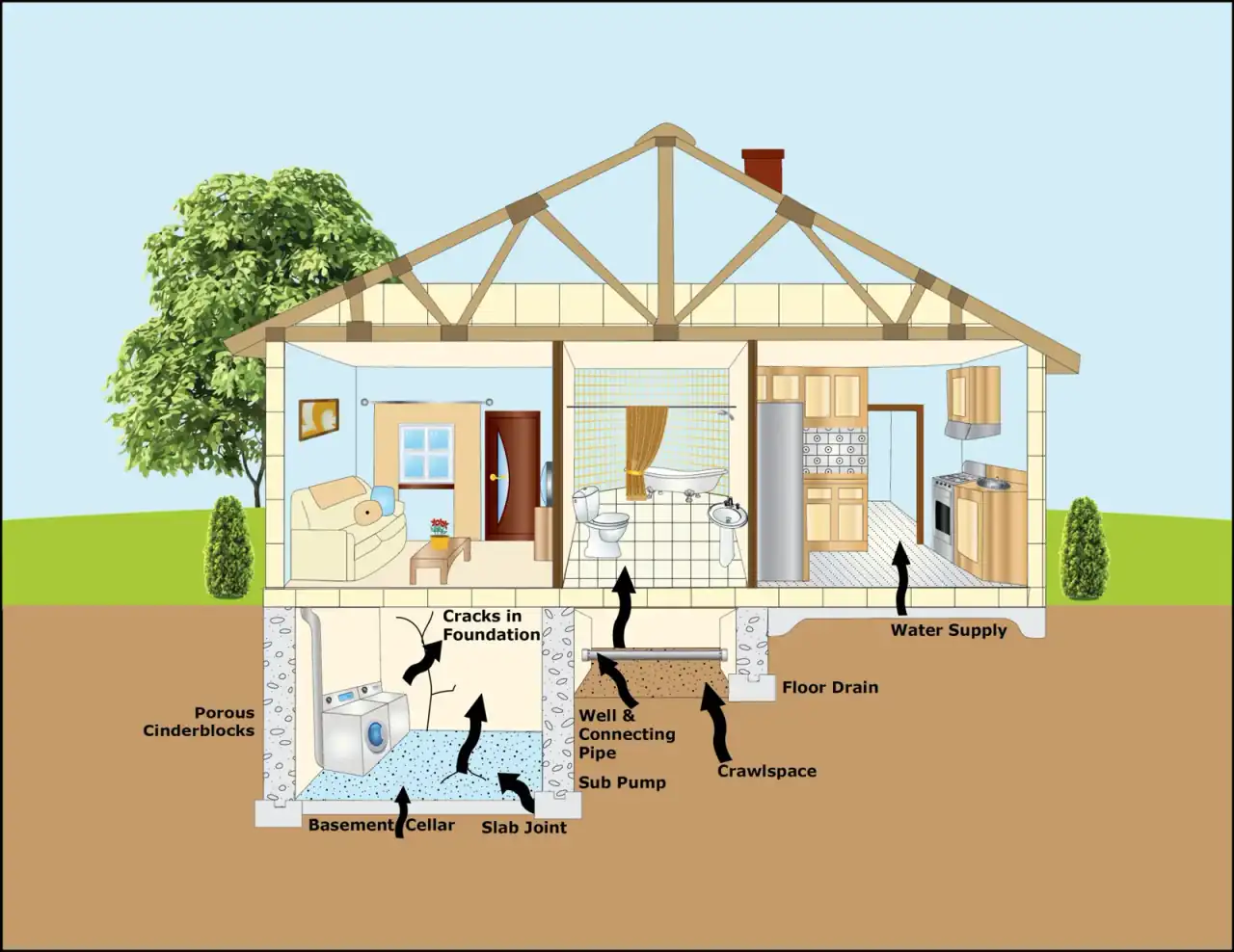
EPA estimates radon causes about 21,000 lung cancer deaths a year in the US and is the leading cause among people who have never smoked. NHDES puts the toll at an estimated 100 New Hampshire residents a year.
How common are arsenic and radon in New Hampshire wells?
Arsenic
NHDES estimates 25 to 30% of private residential wells have arsenic at 5 ppb or higher, which works out to about 116,000 people drinking water above that level (NHDES, 2021). Arsenic has no taste, color or smell, and because the bedrock is so fractured, “even wells within short distances” can test very differently (NHDES fact sheet DWGB-3-2).
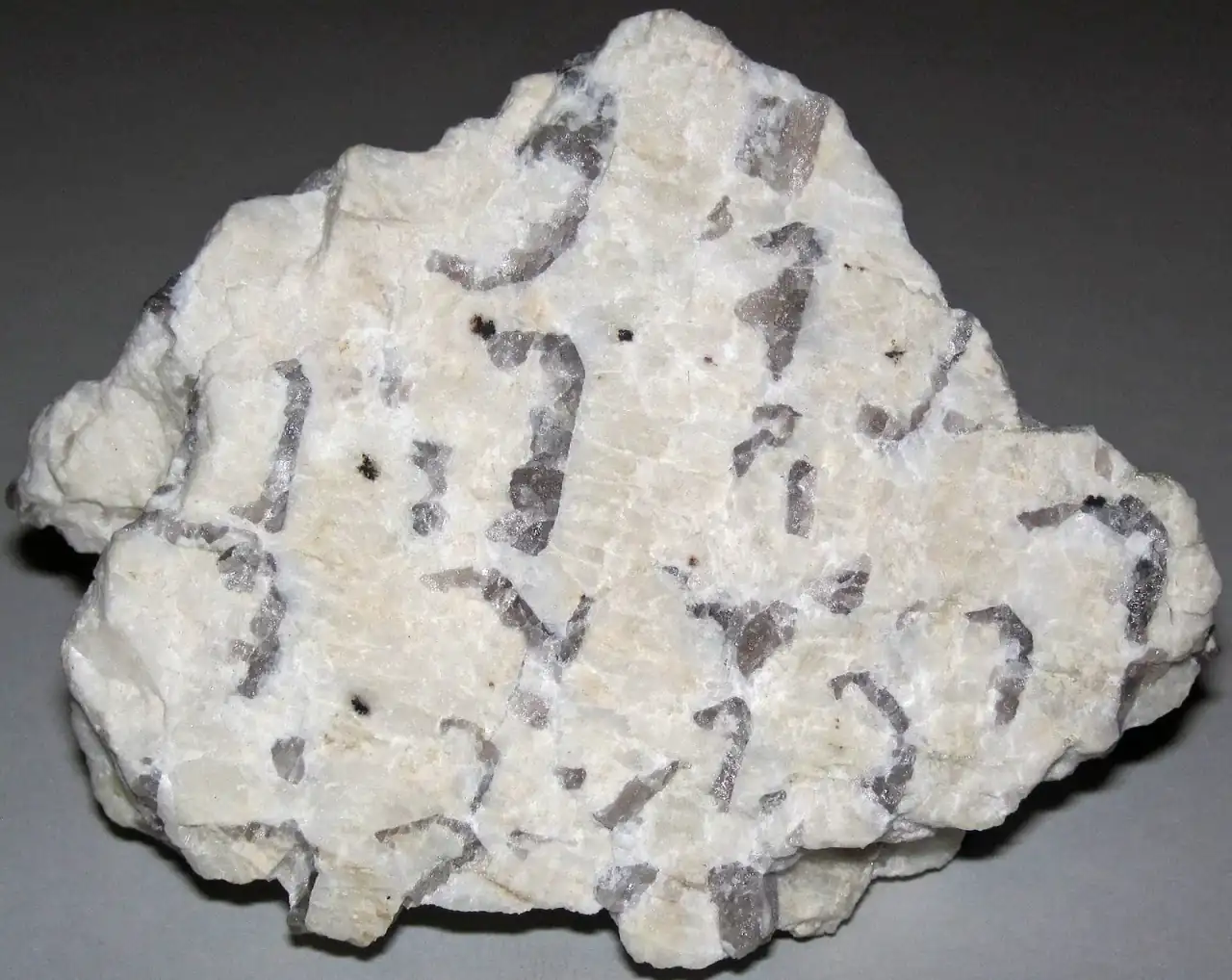
Geography helps a little. A USGS probability model found the southeastern counties of Merrimack, Strafford, Hillsborough and Rockingham have the greatest potential for arsenic above 5 and 10 µg/L (USGS SIR 2012-5156). That lowers the odds in Grafton and Coos. It does not clear any one well, and the model’s authors say it is not designed to predict a single well. Rock type matters too: in central New Hampshire, USGS found elevated arsenic tied to pegmatites, coarse granite veins whose rock averages about 9.6 mg/kg of arsenic against 0.24 mg/kg in the surrounding granite (USGS SIR 2004-5093).
Radon in water
About half of the state’s bedrock wells have radon “at levels of concern,” per NHDES. An older USGS analysis of NHDES lab data found 96% of domestic bedrock wells above the 300 pCi/L figure EPA once proposed for public water (USGS SIR 2004-5093). Dug wells and point wells “tend to have minimal to no radon” (NHDES DWGB-3-12), but nearly every new well in the North Country is drilled into rock.
Radon in water matters mostly because it comes out in the shower, the dishwasher and the laundry. NHDES’s rule of thumb is that every 10,000 pCi/L in the water adds about 1 pCi/L to the indoor air. A well at 30,000 pCi/L adds roughly 3 pCi/L, on top of whatever comes up through the foundation.
Bedrock wells high in radon are also more likely to carry uranium and other radionuclides, so NHDES recommends testing for uranium and gross alpha at the same time (NHDES DWGB-3-11).
What are the action levels for radon and arsenic?
| Contaminant | Number to know | What it means | Source |
|---|---|---|---|
| Radon in air | 4 pCi/L | EPA recommends fixing the home at or above this | EPA |
| Radon in air | 2 to 4 pCi/L | Still a risk; EPA says it can often be reduced | EPA |
| Radon in water | 10,000 pCi/L or more | NHDES recommends treating the water along with air mitigation | NHDES DWGB-3-12 |
| Radon in water | 2,000 to 10,000 pCi/L | Treatment “may be advisable” if indoor air is 4 pCi/L or more | NHDES DWGB-3-12 |
| Radon in water | under 4,000 pCi/L | Retest air and water every 3 to 5 years | NHDES DWGB-3-12 |
| Arsenic | 5 ppb | NH limit for public water systems since July 2021; NHDES advises well owners to use it too | NHDES |
| Arsenic | 10 ppb | Federal limit for public water systems | NHDES DWGB-3-2 |
There is no federal or state standard for radon in drinking water. EPA’s proposal of 300 pCi/L, with an alternative of 4,000 pCi/L, has never been finalized (Water Quality Association). Private wells are not covered by any of these limits. No state law requires a private well to meet a water quality standard, though NHDES notes that local ordinances may let a town withhold a building or occupancy permit if the water is poor, and the state lab has noted that some lenders and towns require a radon test for loans or occupancy permits (NH PHL water testing guide).
When you sell, RSA 477:4-a requires the seller to give the buyer a written radon and arsenic notice before the purchase and sale agreement. It is a notice only and does not require a test. A separate statute, RSA 477:4-c, requires the seller to disclose the date of the most recent water test and any unsatisfactory result (NHDES DWGB-1-2), so keep your results.
Does New Hampshire’s building code require radon-resistant construction?
No. New Hampshire moved to the 2024 International Residential Code on July 1, 2026. The Building Code Review Board’s summary lists exactly two IRC appendices adopted for houses, Appendix BB (tiny houses) and Appendix BO (existing buildings), and says other appendices “shall not apply unless specifically adopted” (NH Building Code amendments, July 1, 2026). The radon appendix, now called Appendix BE and formerly Appendix F and AF, is not on the list. The radon industry’s August 2026 adoption table also shows New Hampshire with no radon-resistant construction code (AARST).
That puts New Hampshire behind its neighbors. The Environmental Law Institute lists Maine, Massachusetts and Connecticut among the states with mandatory radon control for new homes (ELI, July 2026). Our permits guide covers the rest of the July 2026 code change, including the six-month window when either code could be used.
One thing the state does regulate is who installs a radon-in-air system after the fact. Since January 1, 2015, radon mitigation designers and installers working in New Hampshire must be nationally certified (NHDES DWGB-3-12). Radon-in-water installers need no radon certification, though the plumbing work may need a licensed plumber (NH DHHS).
Should a new house get a passive or active radon system?
Build the passive system. Activate it if the test says so.
What goes in
EPA’s radon-resistant new construction has five parts (EPA home buyer’s guide, 2024):
- A gas-permeable layer, usually 4 inches of clean gravel under the basement slab, so soil gas can move to the pipe.
- Plastic sheeting over the gravel, with sealed seams.
- Sealing and caulking of below-grade openings in the slab and walls.
- A 3- or 4-inch PVC vent pipe from the gravel, up through the house, out the roof.
- An electrical junction box in the attic for a future fan, plus one in the living space for a fan alarm.
A passive system runs on the natural draft in that pipe. EPA says it reduces radon by about 50% on average, and an active system with an in-line fan brings “virtually all homes” below 4 pCi/L (EPA, Building Radon Out).
What it costs, now versus later
| Option | Typical cost | Source |
|---|---|---|
| Radon-resistant features during construction | $250 to $750 (under $250 if the builder already does sub-slab gravel and poly) | EPA |
| Retrofit mitigation in an existing home | $800 to $2,500 (older EPA figure) | EPA, Building Radon Out |
| Retrofit reports from NH homeowners, 2023-2024 | Several near $1,500; one over $5,000 with two fans and three suction points | r/newhampshire thread, Dec. 2024 (anecdote) |
| Replacement fan | Fans usually last 10 to 15 years | NH DHHS |
The EPA guide is blunt about one shortcut: stubbing a pipe through the slab and capping it, to be finished “later,” is not recommended. It is much cheaper to run the pipe through the house before the walls close than after. A retrofit usually ends up with the pipe and fan on an outside wall, where everyone can see it.
Details we ask for
- Run the riser up an interior wall or a closet chase, so it stays warm and out of sight.
- Leave room in the attic for the fan. EPA says it cannot go in living space or a crawlspace, and needs about 30 inches of straight vertical pipe.
- Label the pipe “Radon System” at every floor so a future electrician or plumber doesn’t cut into it.
- Seal the sump. A sump pit with an open lid short-circuits the whole system.
- Put it in the contract. Since the code doesn’t require it, it only happens if it is written down.
For more on why most North Country houses still get full basements, and what that means for radon and moisture, see our basement vs. slab comparison.
How do you treat arsenic in well water?
Start with a second test. If arsenic is above 5 ppb, NHDES recommends testing for arsenic III, because some treatment removes it poorly (NHDES DWGB-3-2). Arsenic III can be oxidized first with chlorine, ozone, permanganate or manganese dioxide media. Then pick the system:
| System | When it fits | Installed cost (NHDES) | Upkeep |
|---|---|---|---|
| Point-of-use adsorption cartridge at the kitchen sink | Most wells; arsenic is not absorbed through skin | From $150 | Cartridges $80 to $90 each |
| Point-of-use reverse osmosis | Arsenic plus other dissolved minerals | Not listed; get a quote | Wastes 3 to 4 gallons per gallon treated |
| Whole-house iron-arsenic oxidation filtration | Iron at 0.1 mg/L or more | $1,500 to $3,000 for one filtration step | Backwash; works best around pH 7 to 7.5 |
| Whole-house adsorptive media | Over 100 ppb, or if kids drink from any tap | $1,500 to $3,000 | New media every 1 to 3 years, about $1,000 per cubic foot |
| Whole-house anion exchange plus calcite | High arsenic V | $1,500 to $3,000 | Salt; must have the calcite neutralizer to avoid leaching lead and copper |
Costs are from NHDES’s 2021 fact sheet. They have not been updated, so treat them as a floor and get two quotes.
NHDES calls point-of-use treatment “the most cost-effective and simplest solution” for most wells, because bathing in arsenic water is not a known risk. The catch is behavior: every glass of water, pot of pasta and ice cube has to come from that one tap. Above 100 ppb, or with small children who drink from the bathroom sink, go whole-house.
After any system goes in, NHDES recommends testing the treated water for arsenic every quarter for the first year and twice a year after that.
How do you remove radon from well water?
Radon has to be treated where the water enters the house, because it escapes at every faucet and shower. There are two choices (NHDES DWGB-3-11):
| Method | How it works | When NH agencies say to use it | Cost estimates |
|---|---|---|---|
| Aeration (“bubbler”) | Bubbles air through the water in a tank and vents the radon outdoors | NHDES calls it the preferred method at any level | About $7,000 installed (Vermont Dept. of Health, 2024); $3,000 to $4,500 plus $50 to $150 a year to run (EPA, 2003) |
| Granular activated carbon | Carbon tank holds radon until it decays | NHDES: only at or below 10,000 pCi/L, with carbon changed every 1 to 2 years | About $2,000 (Vermont, 2024); $1,000 to $3,000 (EPA, 2003) |
DHHS adds that charcoal filters “are not very effective” above 2,000 pCi/L and that radioactivity can build up in the filter (NH DHHS). The EPA figures are more than 20 years old, so the Vermont numbers are the better guide to current prices. One NH homeowner reported paying $5,000 for a water system with a lifetime service contract in 2024 (r/newhampshire, anecdote). In another thread, a commenter said bids for the same setup varied threefold, so get more than one.
A cautionary example
A Kingston homeowner posted in January 2026 that their new-construction house had tested 2.3 pCi/L in the basement air, under the action level. Two years later they learned the well had never been tested for radon, and it came back at 44,000 pCi/L (r/newhampshire, anecdote). By the NHDES rule of thumb, 44,000 ÷ 10,000 means the water alone could add about 4.4 pCi/L to the indoor air whenever water is running. That is well above the NHDES 10,000 pCi/L treatment line, and an air test taken while little water is running may not show it, so test both the air and the water.
When and how often should you test?
| When | Test | Approximate cost |
|---|---|---|
| New well drilled, before the water treatment is chosen | Standard Analysis plus radon (bacteria, nitrate, arsenic, uranium, lead, copper, manganese, radon and more) | $120 at the state lab |
| Same time, bedrock well | Radiological package (gross alpha, uranium, radon); arsenic III follow-up if arsenic is over 5 ppb | $100 for radiological at the state lab |
| Radon in water | Two tests at least a month apart before buying treatment, per NHDES | $25 each for radon alone at the state lab |
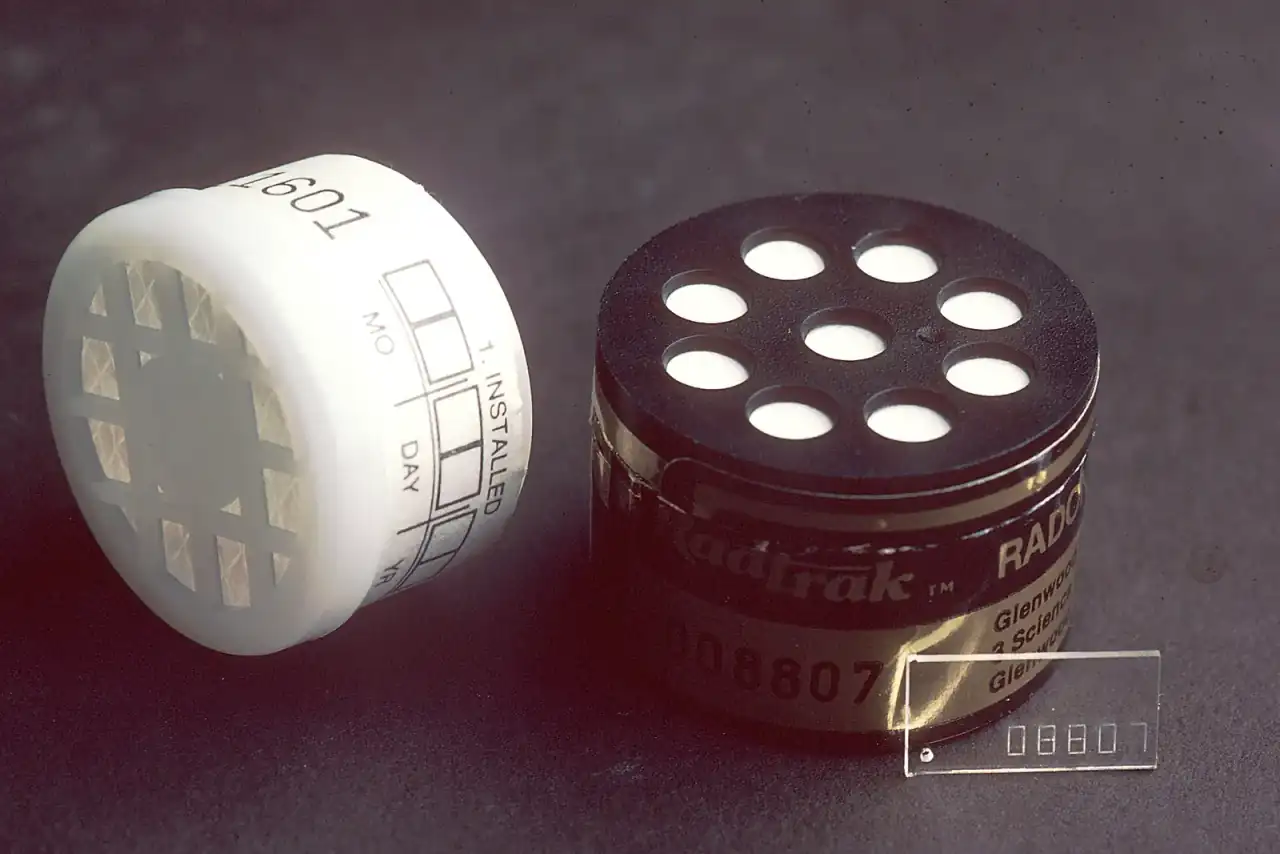
| After you move in | Radon in air, ideally a long-term test through a heating season | Free short-term kit from the state |
| Every year | Bacteria, nitrate and nitrite in the well | $35 basic analysis |
| Every 3 to 5 years | The rest of the well list, including arsenic, radon and uranium; also the treated water | $120 |
| Every 2 years | Radon in air, and after any construction on or near the house | Free kit or library monitor |
Prices are from the NH Public Health Laboratories submittal form. The testing schedule is from NHDES’s April 2026 testing guidance and the DHHS radon program. The state lab is in Concord, and the April 2026 NHDES lab list includes Endyne, with drop-off points in Lebanon and St. Johnsbury, Vermont, which is closer to Littleton. Enter results in NHDES’s free Be Well Informed tool for a treatment recommendation.
For radon in air, the state offers free short-term test kits to residents through aelabs.com/nh, and some public libraries lend handheld radon monitors. Air results swing with the season, so a single winter test in a closed-up basement is a starting point, not the final word.
Is there money to help pay for testing or treatment?
Not much, and we found nothing aimed at arsenic or radon alone.
The DHHS radon program gives New Hampshire residents free radon test kits. The NHDES PFAS Removal Rebate pays up to $5,000 for treatment, or $10,000 to connect to a public water system, but only for wells with PFAS above the state or federal limits. It can also cover radon pretreatment above 4,000 pCi/L when installed with a carbon PFAS system (NHDES PFAS rebate; Env-Dw 1500). Arsenic and radon treatment by themselves are not eligible.
USDA’s Section 504 Home Repair program offers loans up to $40,000 at 1% for low and very-low-income owners, and grants up to $10,000 for very-low-income owners 62 and older, to remove health and safety hazards in a home they already own and occupy in an eligible rural area (USDA Rural Development). It doesn’t help with a new house.
Some water treatment marketing sites advertise state rebates of $5,000 to $10,000 for arsenic or radon. The only NHDES well treatment rebate we could find is the PFAS program above. Ask the installer to name the program and check it with NHDES before you count on it.
What should a new-house plan include?
At the design and contract stage:
- Drill and test the well early. Order the Standard Analysis plus radon and the radiological package as soon as the well is in. Results decide whether you need space in the basement for an aeration tank, a filter or a softener.
- Leave room for treatment. An aeration system needs floor space near where the water line enters, a vent to the outdoors, and a power outlet. Plan it into the mechanical room even if the first test is clean.
- Write the passive radon system into the contract: gravel, sealed poly, sealed sump, a riser through the house to the roof, a labeled pipe and attic junction box.
- Seal the slab and foundation penetrations during construction, when it is easy.
- Test air after occupancy. Activate the fan if the result is 4 pCi/L or more, using a nationally certified mitigator.
- Retest on schedule, and keep the results with the house records. A buyer will ask for them.
Mistakes that cost money:
- Assuming a neighbor’s clean test covers your well.
- Testing only the air, or only the water.
- Buying a whole-house arsenic system before the arsenic III test, then finding the media won’t remove it.
- Putting in carbon for high radon in water, then paying for frequent changeouts or disposing of radioactive media.
- Capping a radon stub in the slab and calling it a system.
Radon and arsenic are site costs, just like the septic and the well. Our post on site costs for septic, well and ledge puts them in the same budget, and our guide to the cost of building a house in New Hampshire shows where they sit in the total.
If you are planning a custom home in the Littleton area, Fregeau Builders can walk you through where the radon pipe and water treatment go before the foundation is poured. Contact us to talk about your lot.
Sources
- NH DHHS Radon Program: Residential Radon Risk, Local Levels and Testing Rates (data brief, July 2026) (accessed November 2026)
- NH DHHS: Tracking Radon (accessed November 2026)
- NH Environmental Public Health Tracking: Spotlight, Radon Risk (January 2016) (accessed November 2026)
- NH DHHS: Fixing Radon, Mitigation (accessed November 2026)
- US EPA: Health Risk of Radon (accessed November 2026)
- NHDES: More Protective Arsenic Standard Will Reduce Risk for Many (March 2021) (accessed November 2026)
- NHDES: Drinking Water (accessed November 2026)
- NHDES Fact Sheet DWGB-3-2: Arsenic in New Hampshire Well Water (2021) (accessed November 2026)
- NHDES Fact Sheet DWGB-3-12: Radon in Your Home (2020) (accessed November 2026)
- NHDES Fact Sheet DWGB-3-11: Radionuclides in Drinking Water (2020) (accessed November 2026)
- NHDES Fact Sheet DWGB-1-2: Bedrock (Artesian, Drilled) Well Design (2021) (accessed November 2026)
- NHDES: Water Testing Guidance for New Hampshire Private Well Users (April 2026) (accessed November 2026)
- USGS SIR 2012-5156: Estimated Probability of Arsenic in Groundwater from Bedrock Aquifers in New Hampshire (accessed November 2026)
- USGS SIR 2004-5093: Quality of Water in the Fractured-Bedrock Aquifer of New Hampshire (accessed November 2026)
- Water Quality Association: Granular Activated Carbon Fact Sheet (accessed November 2026)
- NH Building Code Review Board via NHBOA: New Hampshire Building Code including Amendments, July 1, 2026 (accessed November 2026)
- AARST: RRNC Code Adoption Data by State and Locality (August 2026) (accessed November 2026)
- Environmental Law Institute: Radon Control in New Home Construction (July 2026) (accessed November 2026)
- NH RSA 477:4-a: Notification Required; Radon, Arsenic, Lead, PFAS and Flood (accessed November 2026)
- US EPA: How to Protect Your Family from Radon When Buying a Newly Built Home (accessed November 2026)
- US EPA: Home Buyer’s and Seller’s Guide to Radon (EPA 402/K-24/001, 2024) (accessed November 2026)
- US EPA: Radon-Resistant New Construction for Home Buyers (accessed November 2026)
- US EPA: Building Radon Out, A Step-by-Step Guide (accessed November 2026)
- US EPA: Consumer’s Guide to Radon Reduction (402-K-03-002, 2003) (accessed November 2026)
- Vermont Department of Health: Fixing Radon in Your Home (January 2024) (accessed November 2026)
- NH Public Health Laboratories: Water Test Submittal Form and Testing Guide (accessed November 2026)
- NH Public Health Laboratories: Water Testing Guide (earlier edition) (accessed November 2026)
- NHDES: PFAS Removal Rebate Program for Private Wells (accessed November 2026)
- NH Code of Administrative Rules: Env-Dw 1500, PFAS Removal Rebate Program (accessed November 2026)
- USDA Rural Development: Single Family Housing Repair Loans & Grants, Vermont and New Hampshire (accessed November 2026)
- Reddit r/newhampshire: Radon Mitigation (December 2024), homeowner reports (accessed November 2026)
- Reddit r/newhampshire: Extremely high radon levels in well water (January 2026), homeowner report (accessed November 2026)