To build a house in New Hampshire you need, in order: a state septic approval from NHDES (unless you are on town sewer), a driveway permit from the town or from NHDOT if you front a state road, any shoreland or wetlands permit the lot triggers, an energy code (EC-1) approval, and then the town building or building/zoning permit. Since July 1, 2026 the state code is the 2024 International Residential Code with the 2018 IECC energy code, and permits filed through December 31, 2026 may still use the 2021 codes. The town permit is often the fastest step. The septic design and state approvals set your schedule.
Statute sets some of the state fees and deadlines. The town steps vary, and Littleton, Bethlehem and Franconia each handle them differently.
In what order should you get permits to build a house in NH?
| # | Step | Who | Why it comes here |
|---|---|---|---|
| 1 | Check zoning: lot size, frontage, setbacks, use | Town planning/zoning office | A variance or subdivision adds board hearings and months |
| 2 | Survey, wetland flagging if needed, shoreland check | Surveyor, wetland scientist | Sets where the house, septic and driveway can go |
| 3 | Test pits and septic design | NH-permitted septic designer | Decides bedroom count and house location; needs unfrozen ground |
| 4 | Local septic review (where required), then NHDES approval | Town, then NHDES ($450) | Towns want the approval number on the building application |
| 5 | Driveway permit | Town, or NHDOT for state roads | Up to 60 days at NHDOT |
| 6 | Shoreland and/or wetlands permit | NHDES | Needed before any excavation in the jurisdictional area |
| 7 | House plans, structural design and EC-1 energy form | Builder, designer, engineer | EC-1 goes to the town official, or to NH DOE in non-enforcing towns |
| 8 | Address assignment, if the town requires it first | Town | Littleton has a separate address request form |
| 9 | Building or building/zoning permit | Town | 30-day decision once complete |
| 10 | Inspections during construction | Town building official, where one exists | Foundation, frame, electrical, plumbing, final |
| 11 | NHDES septic inspection and Approval for Operation | NHDES | Needed before the house is used |
| 12 | Certificate of occupancy, where the town issues one | Town | Required before occupancy only where adopted |
Jump to the local requirements for Littleton, Bethlehem or Franconia.
Which building code does New Hampshire use in 2026?
New Hampshire has one state building code, set by statute in RSA 155-A. It applies in every city and town, whether or not the town has a building inspector. RSA 155-A:2 says all buildings constructed in the state “shall comply with the state building code and state fire code,” and makes the contractor responsible for meeting it.
What changed on July 1, 2026
House Bill 1159 (2026 Chapter Law 49) moved the state to the 2024 model codes, effective July 1, 2026, according to the NH Municipal Association and NH Building Officials Association joint guide published in September 2026.
| Code | Edition in force from July 1, 2026 | Allowed during concurrency (to Dec 31, 2026) |
|---|---|---|
| International Residential Code (houses) | 2024 | 2021 |
| International Building Code | 2024 | 2021 |
| International Energy Conservation Code | 2018 (not updated) | 2018 |
| National Electrical Code | 2023 | 2023 |
| Plumbing, mechanical, existing building, pool codes | 2024 | 2021 |
Source: NH Division of Fire Safety, State Building Code. All editions apply with NH amendments.
The six-month concurrency period runs July 1 to December 31, 2026. During it you can show compliance with either the 2021 or the 2024 set, “but not a combination of the 2 codes” (RSA 155-A:2, I). From January 1, 2027, all permit requests follow the 2024 codes. The code in effect when the town receives your application stays in effect for that permit, so a permit filed in December 2026 under the 2021 IRC can be built under the 2021 IRC.
New Hampshire kept the 2018 IECC. It did not adopt the 2021 or 2024 energy codes, per the Building Code Review Board’s amendment summary. The NH version of the 2024 IRC also adopts Appendix BB (tiny houses) and Appendix BO (existing buildings).
Towns can no longer change the technical rules
Senate Bill 94 (2026 Chapter Law 17) ended local technical amendments from July 1, 2026. Towns keep control of permitting, fees and certificates of occupancy, but they cannot make the structural or energy rules stricter or looser than the state’s (NHMA/NHBOA guide; RSA 155-A:3). Older local amendments that were confirmed by the state board still stand. Zoning (setbacks, lot size, height) is separate and remains fully local.
Does every New Hampshire town have a building inspector?
No. Enforcement is a town choice. Under RSA 155-A:3, a town’s legislative body may create a local enforcement agency with a building official, an appeals board and a fee schedule. Towns that never did so have no one with authority to issue code permits or inspect.
What applies in a town without enforcement
The code still applies. RSA 155-A:2 puts the burden on the contractor, and says no town is liable for a contractor’s failure to comply. The state usually does not inspect: the State Fire Marshal may enforce the building code in such a town only “upon written request of the municipality” (RSA 155-A:7). Contractors in those towns must notify the Fire Marshal of the type of construction before starting, but one- and two-family dwellings are excluded (RSA 155-A:2, VI).
The energy code form goes to the state. RSA 155-A:10-a sends EC-1 forms from towns without an enforcement mechanism to the NH Department of Energy, which reviews them and forwards them to the town. Under the Department’s rule, En 1800, no project is approved until it issues a verification letter.
Zoning still applies too. Most of these towns issue a building/zoning permit that checks setbacks, use and the other approvals, even without code inspections.
Which North Country towns send the EC-1 to the state?
The NH Department of Energy’s list of towns that still submit EC-1 forms to the state includes Littleton, Franconia, Sugar Hill, Lincoln, Easton, Whitefield, Bath, Landaff, Lyman, Monroe, Jefferson, Lancaster and Dalton. Bethlehem is not on the list, which fits with Bethlehem having its own building inspector. Forms go to EnergyCodes@energy.nh.gov.
With no inspector, your builder’s own standards and your written contract do the work an inspection would. We suggest writing the code edition, the energy compliance path and the licensed trades into the contract. Our guide to choosing a builder covers what else to ask.
Do you need state septic approval before a town building permit?
Yes, in practice. RSA 485-A:32 says no person shall “construct any building from which sewage or other wastes will discharge” without prior NHDES approval of the septic plans. Towns enforce this by asking for the state approval number on the building permit application. Bethlehem’s single-family application has a line for the “Septic Approval for Construction” number, date and approved bedroom count.
How the septic approval works
| Step | Who | Rule or number | Source |
|---|---|---|---|
| Test pits and design | NH-permitted septic designer | Plans must be prepared by a permitted designer | NHDES Septic Systems |
| Local review (some towns) | Town | Applicant certifies local requirements are met before applying to the state | RSA 485-A:32, II |
| State fee | NHDES | $450 per system (section last amended effective July 1, 2025) | RSA 485-A:30 |
| State review | NHDES | Approve or request more information within 15 working days of a complete application | RSA 485-A:31 |
| Approval for Construction | NHDES | Issued after state (and any local) approval | NHDES |
| Final inspection | NHDES inspector | Within 7 business days of the installer’s notice; system may not be covered before | RSA 485-A:29 |
| Approval for Operation | NHDES | Needed before the system is used | NHDES |
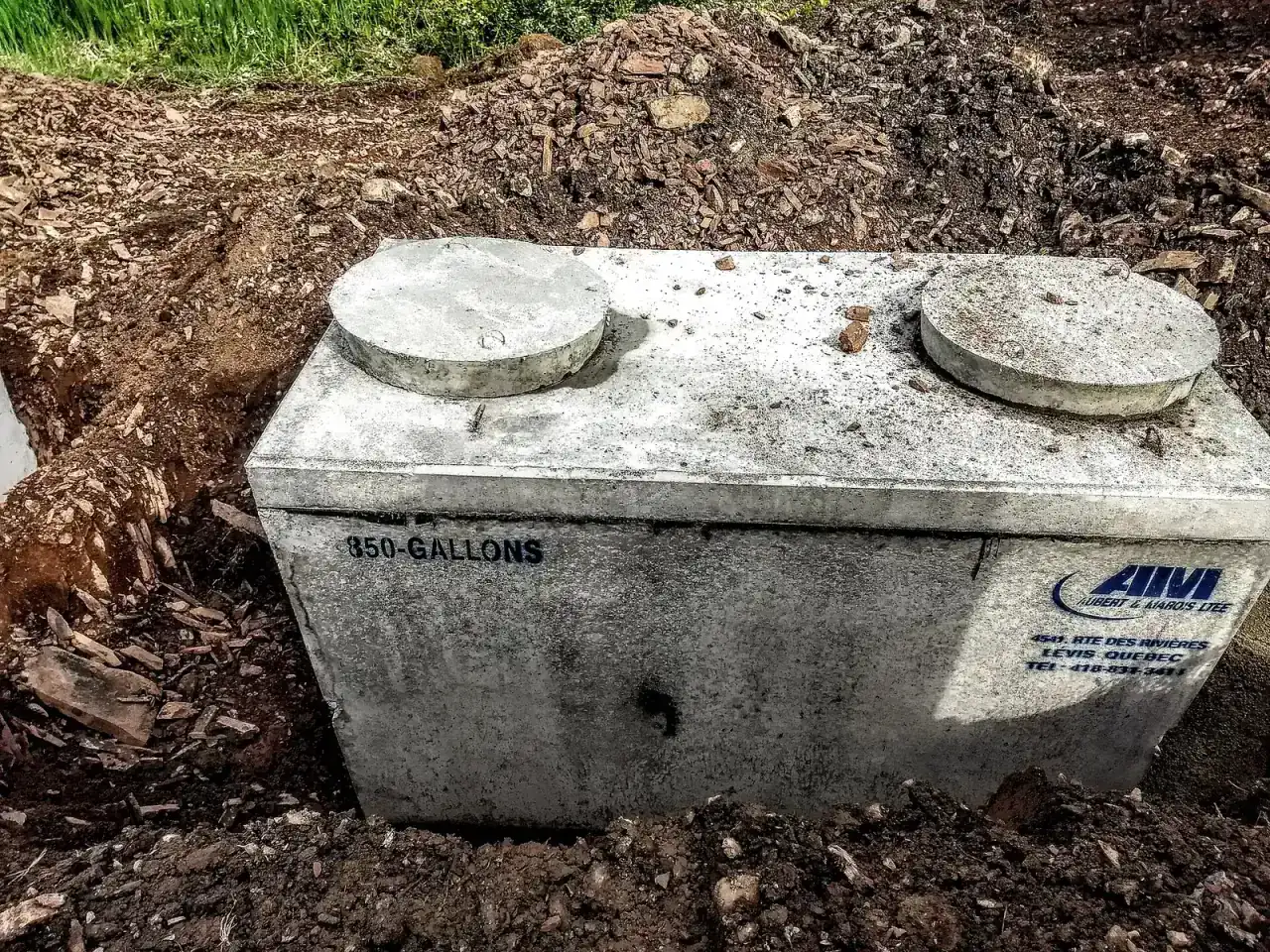
NHDES readopted its septic rules (Env-Wq 1000), and from February 1, 2026 applications on outdated forms are “returned without review” (NHDES). The 15-working-day clock also starts only once the application is administratively complete, so a missing item resets your timeline.
The septic design is usually the step that decides whether a lot works at all. If you haven’t bought the land yet, read our guides to buying land to build on and to septic, well and ledge costs before you commit.
Do you need a driveway permit, and from whom?
Yes. Who issues it depends on the road.
On a state highway, you need a written NHDOT permit before building or substantially altering a driveway onto a class I or class III highway or the state-maintained part of a class II highway (RSA 236:13). For a house lot, DOT “shall issue or deny the permit… within 60 days of receiving a completed application.”
RSA 236:13, V gives the same power to the planning board or governing body for town roads. Littleton posts a driveway permit in its forms center; Bethlehem’s application asks for the “Town Driveway Approval Date” or the NHDOT permit number.
Get the driveway approved before the permit application. The curb cut location affects septic placement, grading and culverts, and some towns, such as Bethlehem, make the owner pay for any culvert the selectmen require.
When do you need a shoreland or wetlands permit?
Shoreland
The protected shoreland is all land within 250 feet of the reference line of lakes and ponds over 10 acres, fourth-order and larger streams and rivers, designated rivers and tidal waters (NHDES Protected Shoreland FAQ). Under RSA 483-B:5-b, no one may start construction, excavation or fill there without an NHDES permit.
| Shoreland path | When it applies | Fee | State decision |
|---|---|---|---|
| Permit by notification | Impacts under 1,500 sq ft and no more than 900 sq ft of new impervious area | $400 base + $0.20/sq ft of impact | Accept or reject within 5 business days |
| Standard shoreland permit | Larger projects, including most new houses | Base fee + $0.20/sq ft of impact | Within 30 days, or 30 days after requested information arrives |
Source: RSA 483-B:5-b. The applicant must notify the town and abutters by certified mail. Roofs, decks and gravel driveways all count as impervious area (NHDES FAQ).
Near Littleton and Bethlehem, the Ammonoosuc River is one common trigger. Bethlehem’s application asks directly whether you are within 250 feet of it.
Wetlands
RSA 482-A:3 requires an NHDES permit to excavate, fill, dredge or build in or on any bank, flat, marsh or swamp. The application is signed by the town clerk, who copies the selectboard, planning board and conservation commission. NHDES lists “roadways or driveways over wetlands or watercourses” and new culverts as typical triggers, and expects you to show the wetland impact was avoided or minimized, for example by routing the driveway through upland (NHDES Wetlands FAQ). If a wetland crossing is unavoidable, add months, not weeks, and a certified wetland scientist to your budget.
Who has to be licensed to build a house in New Hampshire?
No electrical installation may be made “for compensation” except by a state-licensed electrician (RSA 319-C:1). Plumbing and gas fitting are licensed by the state mechanical licensing board. The law exempts a property owner or the owner’s agent working on the owner’s “own single-family detached or townhouse residence, including new construction,” but that exemption does not cover fuel gas fitting (RSA 153:36, VIII). Bethlehem’s permit form adds that an owner “is not qualified to do the work for a rental property” and must live in the home to do their own work (Bethlehem application).
New Hampshire has no state general contractor license, according to permits.llc (a secondary source; we did not find the point stated on a state site). That makes references, insurance certificates and a written contract more important. Septic designers and installers hold NHDES permits (NHDES).
How long does it take to get permits to build a house in NH?
Statutory clocks only start when an application is complete, and they don’t include the design work before it. The law sets these decision times:
| Approval | Statutory decision time | Source |
|---|---|---|
| NHDES septic approval | 15 working days | RSA 485-A:31 |
| NHDES septic final inspection | 7 business days after notice | RSA 485-A:29 |
| NHDES shoreland permit by notification | 5 business days | RSA 483-B:5-b |
| NHDES standard shoreland permit | 30 days | RSA 483-B:5-b |
| NHDOT residential driveway | 60 days | RSA 236:13 |
| Town building permit (single-family) | 30 days | RSA 155-A:4, IX |
Add the steps no statute times: surveying, test pits (which need unfrozen ground), septic design, house plans, and any planning board or zoning board hearing. In Littleton the Planning Board meets the first and third Tuesday and wants applications 18 days ahead; the Zoning Board meets the fourth Tuesday with a 12-day deadline (Littleton Planning & Zoning). Missing a filing date by a day can cost a month.
A realistic rule of thumb for a simple lot with no shoreland, wetland or variance issues is two to four months from the first test pit to a permit in hand. Test pits in winter are hard or impossible on frozen ground, which is one reason we tell clients to get the soils work done in the fall. Our post on building in winter covers the seasonal side.
Do New Hampshire towns issue certificates of occupancy?
Some do. RSA 155-A:3, IV lets a town with an enforcement ordinance require a certificate of occupancy before a new building is used. Separately, the septic system needs its NHDES Approval for Operation before use, wherever you are (NHDES). Bethlehem issues a CO “upon request” after a final inspection (Bethlehem FAQ). Littleton states on page 2 of its permit application that the town does not issue certificates of occupancy.
If your town doesn’t issue a CO, ask your lender early what it will accept at closing on a construction loan. A final septic approval, the DOE energy verification letter and a builder’s completion certificate usually make up the file, but the lender decides.
Building permits in Littleton, Bethlehem and Franconia
Littleton
Permits go through Planning & Zoning, 125 Main Street, Suite 200; 603-575-9176 (town site). There is no separate building department. You need a permit before excavation, demolition, new construction, enlargement, moving a structure or placing a mobile home. Interior renovation of $1,000 or more needs a permit only in the 100-year flood zone (Regulations & Applications). The building permit application and address request were both updated July 27, 2026, and the forms center also has driveway and sewer connection applications (Forms Center).
Littleton asks for an assigned address, driveway approval, a sewer connection or state septic approval, and fire department confirmation where applicable. The July 27, 2026 application lists $200 for residential construction and $50 for an addition. A driveway permit ($150) and E911 address assignment ($25) have separate fees when needed. Town application, pages 1–2
Littleton appears on the NH Department of Energy list for EC-1 energy forms.
Bethlehem
Bethlehem has a Building Inspector and Code Enforcement office at 2155 Main Street; the clerk is at 603-869-3351 ext. 102, Monday to Thursday 9 to 3 (Building Department). Any new construction, remodeling over $1,000 or change in building footprint needs a permit (Bethlehem FAQ).
The single-family application asks for the state septic approval number and approved bedrooms, NHDOT or town driveway approval, licensed electrician and plumber names and license numbers, a scaled site plan, dimensioned floor plans and elevations, the EC-1 form, flood zone and wetland questions, and whether you are within 250 feet of the Ammonoosuc. It also prints the town’s design criteria: 105 psf snow load at 1,800 feet, 100 mph wind and a 60-inch frost depth. The inspections it lists are plumbing, electrical, foundation, frame, final, health and fire. The permit is void if work doesn’t start within 12 months, or if the exterior is still unfinished two years after issue without an extension.
The town posts a separate building permit fee sheet on its forms page, which we could not open. Land-use fees are published: site plan review $100 to $300 by square footage and $100 for a variance or special exception (fee schedule).
Franconia
Permits go through the Selectmen’s Office, 421 Main Street; 603-823-7752. The town’s checklist requires a site sketch showing setbacks, dimensioned plans, elevations for new work or roofline changes, a state septic approval number and any driveway permit. It notes that “the Town needs to review septic design before submission to NH DES” (Franconia checklist, v. 10.07.2017).
Sources disagree on the fee. The town’s 2017 checklist lists a $150 application fee plus 15 cents per square foot, $350 minimum, for a single-family home, with basements, garages, decks and porches counted. A 2026 third-party guide lists $0.06 per square foot with a $150 minimum (Jaspector). Call the town before budgeting. Franconia is on the DOE list, so the EC-1 goes to the state even though the town issues building permits.
Sugar Hill, Lincoln, Easton and Whitefield are also on the DOE list. Check each town’s own form, because prerequisites and fees vary.
If you are planning a build in Littleton, Bethlehem, Franconia or a nearby town, we can walk the lot with you and lay out which of these steps apply before you spend money on plans. Our general contracting work includes coordinating the permit sequence, or you can get in touch with questions about a specific parcel.
Sources
- NH Division of Fire Safety: State Building Code (accessed November 2026)
- NH Municipal Association and NH Building Officials Association: Changes to Building Code Laws, A Guide for Municipalities (September 2026) (accessed November 2026)
- NH Building Code Review Board: New Hampshire Building Code including Amendments, July 1, 2026 (accessed November 2026)
- NH RSA 155-A:2, State Building Code (accessed November 2026)
- NH RSA 155-A:3, Enforcement Mechanism (accessed November 2026)
- NH RSA 155-A:4, Permit Required (accessed November 2026)
- NH RSA 155-A:7, Enforcement Authority (accessed November 2026)
- NH RSA 155-A:10-a, Energy Code Compliance Form (accessed November 2026)
- NH Department of Energy: Energy Codes (accessed November 2026)
- NH Department of Energy: Rule En 1800, Administration of NH Energy Conservation Code (2025 filing) (accessed November 2026)
- NHDES: Septic Systems (accessed November 2026)
- NH RSA 485-A:29, Submission and Approval of Plans (accessed November 2026)
- NH RSA 485-A:30, Fees (accessed November 2026)
- NH RSA 485-A:31, Action on Applications (accessed November 2026)
- NH RSA 485-A:32, Prior Approval; Permits (accessed November 2026)
- NH RSA 236:13, Driveways and Other Accesses to the Public Way (accessed November 2026)
- NH RSA 483-B:5-b, Shoreland Permit Required (accessed November 2026)
- NHDES: Protected Shoreland FAQ (accessed November 2026)
- NH RSA 482-A:3, Excavating and Dredging Permit (accessed November 2026)
- NHDES: Wetlands and Stream Crossings FAQs (accessed November 2026)
- NH RSA 319-C, Electricians (accessed November 2026)
- NH RSA 153:36, Mechanical Licensing Exceptions (accessed November 2026)
- Town of Littleton: Planning & Zoning (accessed November 2026)
- Town of Littleton: Regulations & Applications (accessed November 2026)
- Town of Littleton: Forms Center (accessed November 2026)
- Town of Littleton building and zoning permit application, revised July 27, 2026
- Citizen Portal: Littleton Select Board begins overhaul of administrative fees (June 9, 2026) (accessed November 2026)
- Town of Bethlehem: Building Department (accessed November 2026)
- Town of Bethlehem: FAQ (accessed November 2026)
- Town of Bethlehem: New Single-Family Construction Building Permit Application (accessed November 2026)
- Town of Bethlehem: Reports, Documents & Forms (accessed November 2026)
- Town of Bethlehem: Land Use Application Fees (accessed November 2026)
- Town of Franconia: Residential Building Permit Application Process (v. 10.07.2017) (accessed November 2026)
- Jaspector: Franconia, NH 2026 Building Permit Guide (third-party) (accessed November 2026)
- permits.llc: What If Your New Hampshire Town Has No Building Inspector? (secondary) (accessed November 2026)