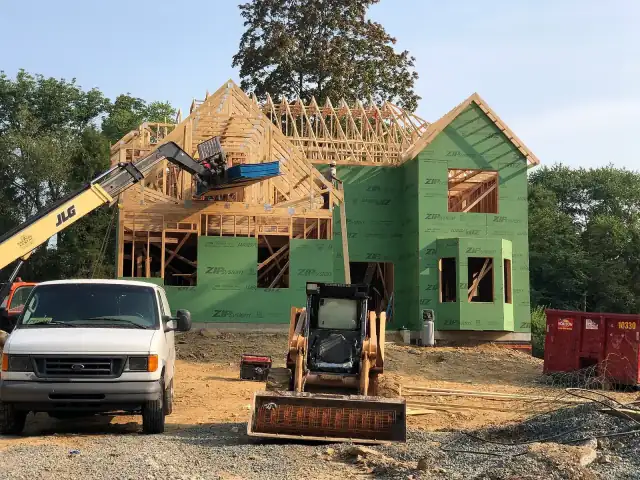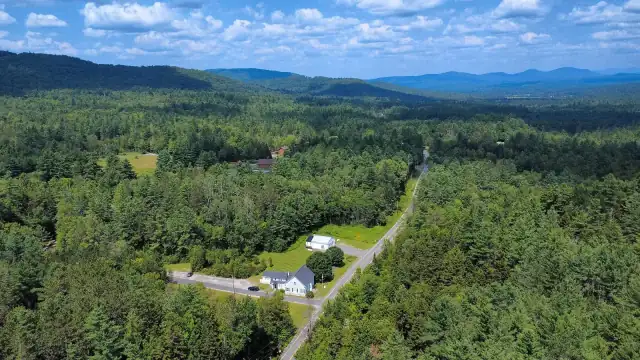
On a rural New Hampshire lot, site work commonly adds $40,000 to $100,000 or more to the cost of a new home, and none of it is in a builder’s price per square foot (Rock Maple Builders). The big pieces are a state-approved septic system (about $12,000 to $25,000 for a conventional design, $30,000 to $60,000 for advanced treatment), a drilled bedrock well (statewide median depth about 400 feet), a driveway, electric service past the utility’s free footage, clearing, and any ledge you hit. The cheapest way to pin those numbers down is to dig test pits and get a septic design before you buy the land or settle the house plan.
Build a site-work budget for your own lot
Download the site-work budget worksheet (CSV). Open it in Excel or Sheets. Enter estimates and written quotes separately, with the supplier, quote date and exclusions. Leave unknown amounts blank. Compare totals only when the same work is covered in both columns.
Start with the driveway length and nearest power pole, then get the septic designer, well driller and excavator to price the same site plan. Ask who owns trenching, backfill and rock removal so you can spot gaps or double-counted work. Discuss a northern NH building lot with us.
What does site work cost on a New Hampshire lot?
Most published contractor prices come from the Lakes Region and southern New Hampshire. North Country jobs can differ, mostly on trucking distance, so treat these as a starting point.
| Line item | Typical 2026 range | What moves it | Source |
|---|---|---|---|
| Test pits (excavator time) | $300 to $800 | Access, depth | Lakes Region Land & Excavation |
| Septic design and permitting | $2,500 to $4,000 | Soils, system type | O’Connor Landworks |
| NHDES septic review fee | $450 per system | Set by statute | RSA 485-A:30 |
| Conventional septic, installed | $12,000 to $25,000 | Soils, slope, ledge | O’Connor Landworks |
| Advanced treatment septic | $30,000 to $60,000 | Tight lot, poor soil, water nearby | O’Connor Landworks |
| Well drilling | $30 to $70 per foot | Depth, overburden, access | Granite Well & Pump |
| Pump, tank, wiring, trench to house | $3,000 to $8,500 | Pump depth, distance | Granite Well & Pump |
| Clearing | $1,200 to $8,000+ per acre | Tree size and density | Lakes Region Land & Excavation |
| Gravel driveway | $3,500 (60 ft, flat) to $22,000 (300 ft, uphill) | Length, grade, culverts | O’Connor Landworks |
| Foundation excavation | $3,000 to $10,000 | Size, water, ledge | Lakes Region Land & Excavation |
| Curtain or French drain | $2,000 to $8,000 | Length, depth | Lakes Region Land & Excavation |
| Ledge removal by hydraulic hammer | $50 to $200 per cubic yard | Rock hardness, hauling | GMT Home Designs |
| Eversource line past 300 ft | $43.12/ft overhead, $25.47/ft underground (June 2025 to March 2026) | Distance from existing line | Eversource tariff, NHPUC DE 25-012 |
| NHEC new service | Estimated cost less an allowance of up to $2,400 overhead or $3,200 underground, plus a $320 site visit | Distance, line type | NHEC Schedule of Fees, 2026 |
A worked example using historical rates
Take a hypothetical three-acre wooded lot in Grafton County with the house 300 feet back from a town road, a conventional septic, Eversource power and no serious ledge.
| Item | Math | Range |
|---|---|---|
| Test pits, septic design, permitting | $300 to $800 + $2,500 to $4,000 | $2,800 to $4,800 |
| Conventional septic | Published range | $12,000 to $25,000 |
| Well at the Grafton County median of 420 ft | 420 × $30 to $70, plus $3,000 to $8,500 pump system | $15,600 to $37,900 |
| 300 ft driveway with grade and drainage | Published range | $14,000 to $22,000 |
| 500 ft overhead power line (June 2025–March 2026 rate, replace with your utility’s quote) | (500 − 300) × $43.12 | $8,624 |
| Clear 1.5 acres of mixed woods, remove stumps | 1.5 × ($3,000 to $5,500 + $800) | $5,700 to $9,450 |
| Foundation dig and drainage | $3,000 to $10,000 + $2,000 to $8,000 | $5,000 to $18,000 |
| Total before ledge | about $64,000 to $126,000 |
Add a 2,000 sq ft house at Rock Maple’s published $300 to $450 per square foot ($600,000 to $900,000) and the total lands around $664,000 to $1,026,000, with the site at roughly 7 to 17 percent of it. Our post on what it costs to build a house in New Hampshire covers the house side. If the excavator hits a real ledge shelf, add more; one New England designer reports excavation bills of $15,000 to $20,000 or more once substantial rock turns up (GMT Home Designs).
How does septic approval work in New Hampshire?
Any building with running water that discharges wastewater on site needs a septic system approved by the NH Department of Environmental Services. The plans must be drawn and submitted by a state-permitted designer, and the system needs both an Approval for Construction and an Approval for Operation before anyone uses it (NHDES). The state approval normally comes before the town building permit. Some towns review septic plans first, and NHDES requires proof of that local approval with the application where the town demands it (NHDES proposed rule text, July 2026).
Step 1: Test pits and a perc test
The designer has an excavator dig test pits where the leach field might go, logs the soil layers, looks for the seasonal high water table and ledge, and runs a percolation test (O’Connor Landworks). Under the current rules, the bottom of a new conventional stone-and-pipe bed must sit at least 4 feet above the seasonal high water table, or 24 inches above it with at least 6 inches of specified sand underneath (Env-Wq 1014.08, as shown in the 2026 rule proposal). Shallow ledge or a high water table pushes you toward a raised field, a pump, or an advanced treatment unit.
Bedroom count sets the size. A house with up to four bedrooms needs a septic tank of at least 1,250 gallons, plus 250 gallons for each bedroom over four (Env-Wq 1010.01). Decide the bedroom count before the design goes in.
Step 2: Design, fee and state review
The designer draws the plan and files it with a fee of $450 per system (RSA 485-A:30). By law NHDES has 15 working days from a complete application to approve it or ask for more information (RSA 485-A:31). One Lakes Region installer says state approval takes 2 to 8 weeks in practice and runs slower in summer, when shoreland reviews pile up (O’Connor Landworks).
What changed in 2025 and 2026
- On July 1, 2025, the state budget raised most septic and wetlands application fees by 50 percent. The septic system fee and the subdivision fee per lot are now $450 each (NHDES fee summary). The Legislature’s budget office put the old septic fee at $290 (NH LBA); some town handouts still say $300.
- On February 1, 2026, the readopted septic rules (Env-Wq 1000) took effect. Every application must use the revised forms, and anything submitted on old forms is returned without review (NHDES). If your lot has a design drawn before then that was never filed, ask the designer whether it needs to be redone.
- In summer 2026, NHDES proposed a further round of amendments: clearer plan requirements based on designer feedback after the February rules, online filing through its new NHEnviro system, more cases where partial inspections are allowed, and a requirement that homeowner installers file their form before asking for inspection (Rulemaking notice 2026-159). Ask your designer whether these have taken effect by the time you file.
Step 3: Installation and inspection
A state-permitted installer builds the system. The one exception is a homeowner installing a system for their own primary home (NHDES). An NHDES inspector has to see the open system before it is covered (NHDES), and the rules expect the building foundation or slab to be in place before you request that inspection (Env-Wq 1004.06). That affects the order of work: foundation first, then septic sign-off.
How much does a septic system cost in New Hampshire?
| System type | Installed cost (2026) | When you need it |
|---|---|---|
| Conventional gravity (tank, D-box, leach field) | $12,000 to $25,000 | Decent soil, field downhill of the house |
| Add a pump chamber | +$2,500 to $5,000 | Field uphill of the house or too far for gravity |
| Advanced treatment | $30,000 to $60,000 | Tight lots, poor soils, near water |
| Ledge, long pipe runs or a hillside field | +$2,000 to $6,000 or more | Rock in the field area, long runs |
| Engineered hillside field | +$3,000 to $8,000 over a flat-lot design | Steep lots |
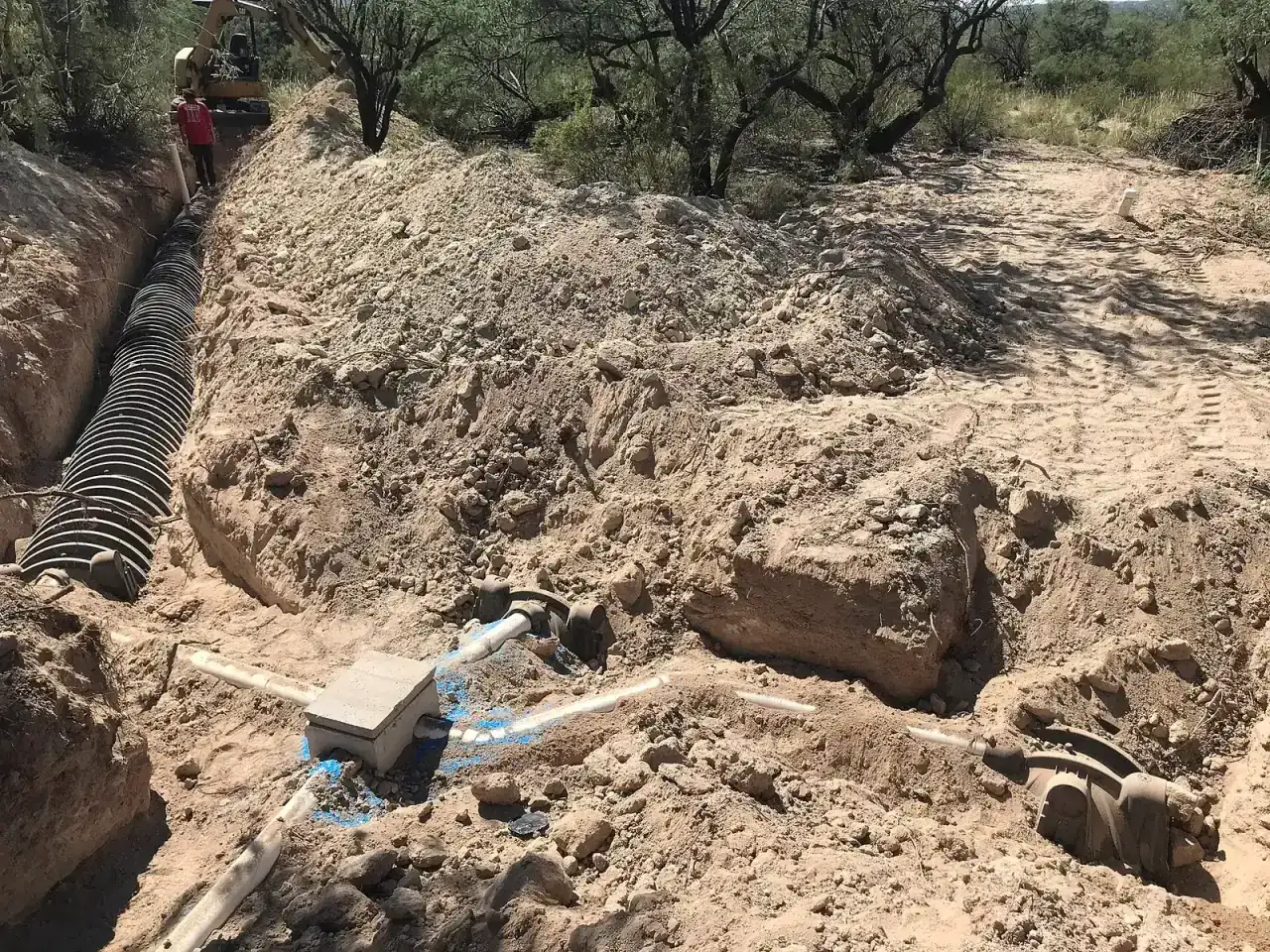
Source: O’Connor Landworks, April 2026. Sources don’t fully agree. A Seacoast and Lakes Region builder puts septic at $15,000 to $40,000 or more depending on soils and design (Rock Maple Builders). The overlap, roughly $15,000 to $25,000, is a fair planning number for a conventional system on an ordinary lot.
How much does a well cost in New Hampshire?
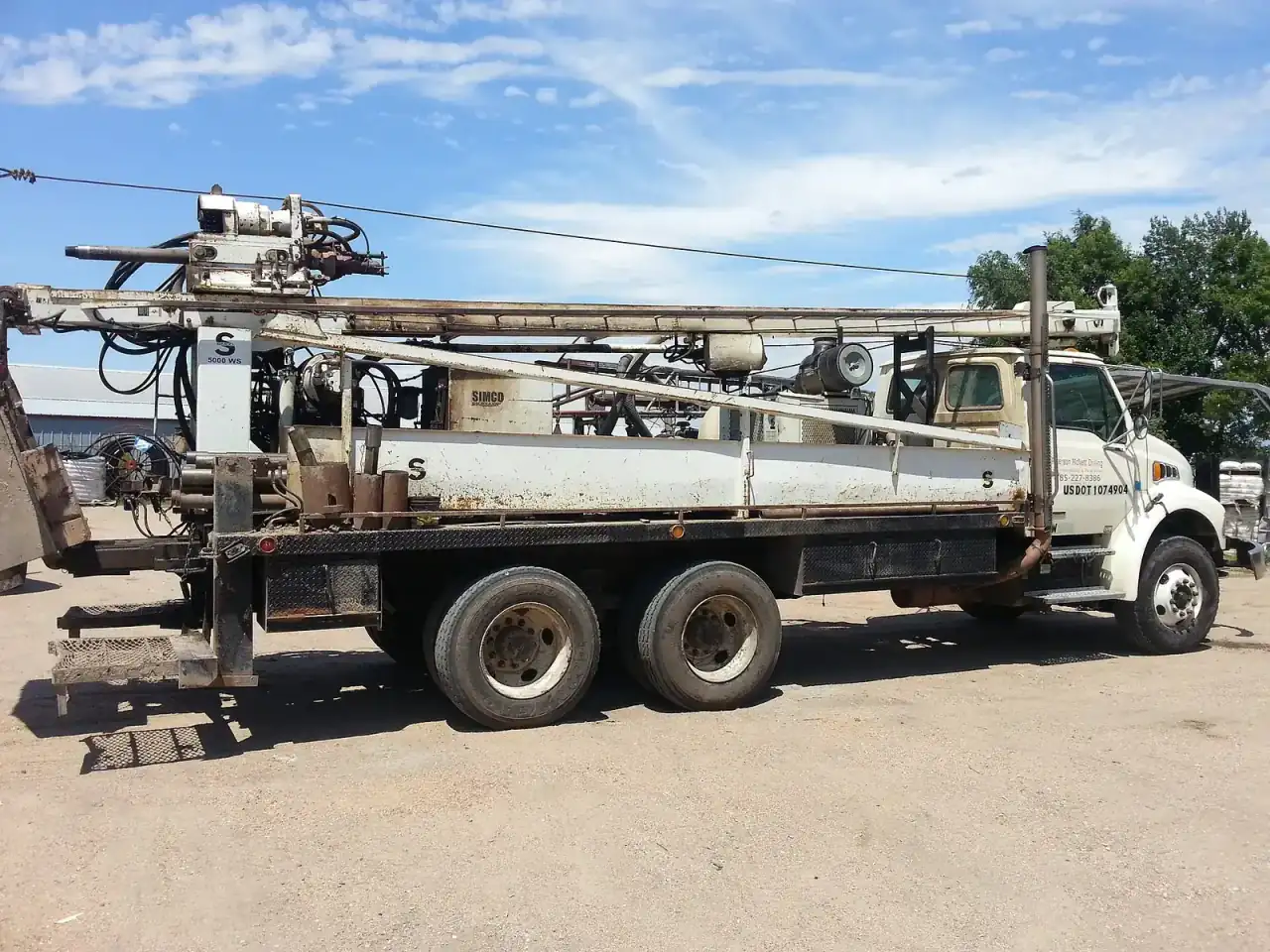
Most household bedrock wells in New Hampshire are 200 to 500 feet deep and some pass 1,000 feet. The statewide median is about 400 feet with a median yield of 15 gallons per minute (NHDES DWGB-1-2). A third-party analysis of NHDES completion reports from 2016 to 2025 put the Grafton County median at 420 feet and Coos County at 360 feet (CostToDrillAWell.com). NHDES is blunt that your neighbor’s depth and yield say little about yours. You can still look up nearby wells in the state’s well records, which go back to 1984 (NHDES FAQ).
The math for a 400-foot well at $30 to $70 per foot is $12,000 to $28,000 for drilling. Add $3,000 to $8,500 for the pump, pressure tank, pitless adapter, wiring and trench, and you get roughly $15,000 to $36,500 (Granite Well & Pump). The same driller advises against fixed-price well quotes: ask for a per-foot rate, an expected range, and a written agreement on what happens if the hole runs long.
How much water is enough?
New Hampshire sets no minimum yield for a private well. The Water Well Board recommends a system that can deliver 600 gallons to the house within two hours, once a day (NHDES FAQ). A low-yield well of 1 to 3 gallons per minute can still work, because a standard 6-inch casing stores about 1.5 gallons per foot of water above the pump (NHDES DWGB-1-2). If yield comes in low, hydrofracking runs about $2,000 to $4,500 (Granite Well & Pump).
Where the well can go
State rules require a 75-foot protective radius around a well serving a home of up to five bedrooms. That 75 feet applies to the septic tank, the leach field and the property line, and the well also has to sit 50 feet from surface water (NHDES FAQ; DWGB-1-2). On a narrow lot, the well radius and the leach field together often decide where the house goes.
Test the water
The state does not require private well water to meet any quality standard, though a town may hold back a permit if the water is poor (NHDES DWGB-1-2). Granite bedrock brings arsenic and radon. In a USGS analysis of NHDES lab data, 21 percent of domestic bedrock wells had arsenic above 10 micrograms per liter and 96 percent had radon above the proposed 300 picocuries per liter standard (USGS SIR 2004-5093). NHDES’s April 2026 guidance lists what to test for, including arsenic, bacteria, radon, uranium, manganese and four PFAS compounds (NHDES testing guidance). Budget for treatment until the results come back.
What happens if you hit ledge?
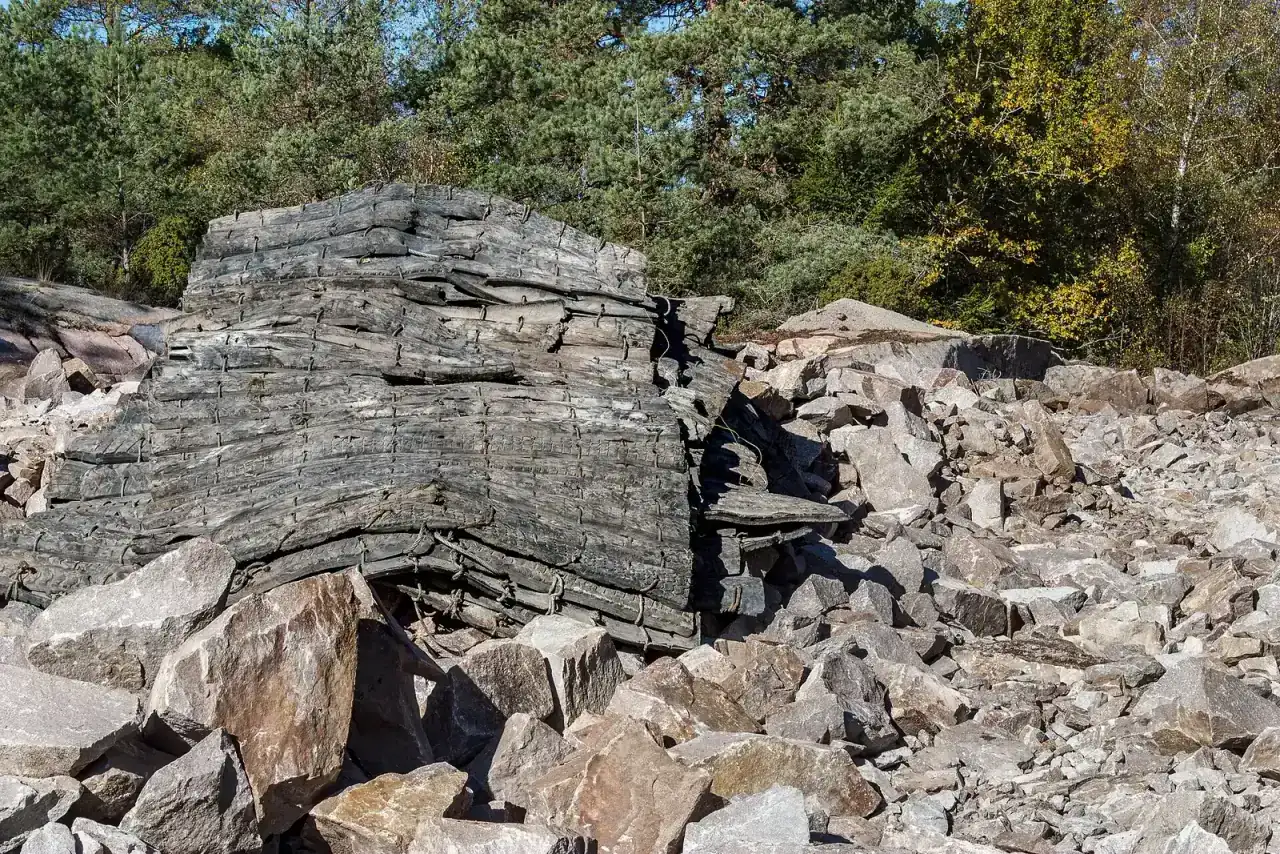
Ledge is bedrock in place. A foundation can be pinned to true ledge, but it can’t rest on a buried boulder that may shift (GMT Home Designs). Breaking rock with a hydraulic hammer on an excavator runs about $50 to $200 per cubic yard before hauling (same source), and a Lakes Region excavator adds $500 to $2,000 or more per day of hammering (Lakes Region Land & Excavation). The volume adds up fast. A 30 by 50 foot basement taken 8 feet down into solid rock is 12,000 cubic feet, or about 444 cubic yards. At $50 to $200 a yard that is roughly $22,000 to $89,000. That is why builders often change the design instead: raise the house and use a frost wall or a walkout, slide the footprint to where the test pits showed deeper soil, or pin footings directly to the rock.
Blasting rules
Blasting takes a state license to use explosives, and a person holding a state certificate of competency has to be on site for every blast (RSA 158:9-h). State rules require the blaster to notify the local police and fire chiefs at least 24 hours ahead and to inspect any building within 100 feet that the blaster doesn’t control before the shot (Saf-C 1607.04 and 1607.05). Many towns add their own permit. Charlestown, for example, requires a permit from the fire chief and a pre-blast survey of structures within 250 feet (Town of Charlestown).
Find it before you dig
Test pits for the septic double as ledge probes, so ask for a few more under the house footprint and along the driveway. One Lakes Region excavator probes long driveway routes for ledge before quoting, because breaking through rock there adds roughly $1,000 to $5,000 (O’Connor Landworks). Put a unit price for rock (per cubic yard or per day) in the contract so a surprise has a known price.
What does a driveway cost, and do you need a permit?
A new driveway onto a state highway needs a written permit from NHDOT, and for a residential driveway the department has to issue or deny it within 60 days of a complete application (RSA 236:13). Towns have the same power over town roads under that statute, and most handle it through the road agent or planning board. Littleton, for example, posts a driveway permit application on its forms page (Town of Littleton).
One Lakes Region excavator prices a properly built gravel drive (topsoil stripped, compacted base, stone layers, crowned) at about $3,500 to $5,500 for a flat 60 feet, $6,500 to $11,000 for 120 feet with a culvert, and $14,000 to $22,000 for a 300-foot uphill rural drive (O’Connor Landworks). A long, steep drive also costs you every winter in plowing and every spring in grading, so a shorter route is often worth giving up some view.
Timing matters too. Towns can post seasonal weight limits on Class IV, V and VI roads to protect them during thaw (RSA 231:191). Gravel, concrete and drill-rig deliveries on a posted road in March or April need written permission or have to wait.
How much does it cost to bring power to a new house?
It depends on who serves the road.
Eversource covers a pole-mounted transformer and the first 300 feet of line, including the service drop. Single-phase line beyond that is billed at an average cost per foot: $43.12 overhead and $25.47 underground for June 1, 2025 through March 31, 2026 (Eversource tariff, NHPUC Docket DE 25-012). The rates reset each April from actual costs, and the PUC approved the 2026 update on April 1, 2026 (Docket DE 26-002), so ask Eversource for the current rate. At the 2025 to 26 rate, a house 800 feet from the line pays for 500 feet: about $21,560 overhead. Above $3,000, the tariff lets you spread the excess over 60 months, with a lien until it’s paid.
New Hampshire Electric Cooperative (NHEC) charges a $320 site visit fee to start, and for a standard single-phase service up to 400 amps you pay the estimated construction cost minus an allowance of up to $2,400 overhead or $3,200 underground (NHEC Schedule of Fees, 2026). Before the site visit NHEC wants an approved septic plan, a site plan, the driveway roughed in, the nearest pole number, and a foundation or other sign you will finish within 12 months. You pay for primary line extended along the road, you dig the trench and lay conduit for underground service, and you supply any easements (NHEC Terms and Conditions).
In Littleton the electric and water utility, Littleton Water & Light, is municipal, so call them early for their requirements. If the lot is on town water, a 3/4-inch service connection carries a $1,710 connection fee plus installation at cost, and the trenching is yours (Littleton Water & Light 2026 rates).
State law also lets you hire a contractor approved by the utility to build the part of the line on your own property (RSA 370:12). Get prices both ways.
What do clearing, grading and drainage cost?
Clearing runs about $1,200 to $3,000 an acre for brush and saplings, $3,000 to $5,500 for mixed woods, and $5,500 to $8,000 or more for mature forest, plus about $800 an acre to pull stumps (Lakes Region Land & Excavation). A southern NH outfit prices rough grading and site preparation at $2,000 to $12,000 or more and finish grading at $1,500 to $6,000 (Ridge Cut Land Services).
Watch the total area you open up. Disturbing more than 100,000 square feet (about 2.3 acres), or 50,000 square feet if any of it is in the protected shoreland, requires an Alteration of Terrain permit from NHDES (NHDES). A single house rarely gets there, but a long driveway plus a big cleared view on a large lot can.
Why do northern New Hampshire lots surprise people?
Soil is thin over granite, so ledge can show up in the leach field, the cellar hole and the driveway cut on the same lot. Houses set back for the view need more driveway and trench: each extra 100 feet adds about $4,312 of overhead line past Eversource’s free 300 feet at the 2025 to 26 rate. Views also come with slope, which means costlier septic fields and, in towns such as Easton, steep slope review. Our guide to buying land to build on in New Hampshire covers those checks.
Footings, water lines and septic pipe all go below a frost depth of about 48 inches (Lakes Region Land & Excavation); see our post on snow load and frost depth in northern New Hampshire. The season is short, too. Posted roads in spring and frozen ground in winter squeeze the dirt work into fewer months, and our guide to building in winter covers what you can and can’t do once the ground freezes.
How do you keep site costs under control?
- Before you buy, dig test pits with a septic designer, look up nearby wells, ask the road agent where a driveway is allowed, and get a utility estimate.
- Site the house around the septic area and the well radius, not the other way around.
- Get the septic design approved before you finish the house plans, since the bedroom count drives it.
- Ask for unit prices: per foot of well and casing, per cubic yard or per day of rock.
- Carry a separate line for ledge and well depth. We tell clients to keep it apart from the general contingency so it doesn’t get spent on finishes.
- Plan the dirt work around mud season and the first hard freeze.
If you have a lot in Littleton, Bethlehem, Franconia, Sugar Hill or a nearby town and want a builder to walk it and price the site work before you commit, Fregeau Builders can help with custom homes from the ground up. Get in touch.
Sources
- Rock Maple Builders: Cost to Build a House in NH (2026) (accessed November 2026)
- O’Connor Landworks: NH Septic Install Cost (2026) (accessed November 2026)
- O’Connor Landworks: Excavation Cost in NH (2026) (accessed November 2026)
- Lakes Region Land & Excavation: NH Dirt-Work Costs, 2026 Benchmarks (accessed November 2026)
- NH General Court: RSA 485-A:30, Fees (accessed November 2026)
- NH General Court: RSA 485-A:31, Action on Applications (accessed November 2026)
- NHDES: Septic Systems (accessed November 2026)
- NHDES: Septic Designer and Installer (accessed November 2026)
- NHDES: Fee changes included in the 2026-2027 state budget (accessed November 2026)
- NH Legislative Budget Assistant: House Finance Tax and Fee Changes, HB 2 (2025) (accessed November 2026)
- NH Office of Legislative Services: Rulemaking Notice 2026-159, Env-Wq 1000 (accessed November 2026)
- NHDES: Env-Wq 1000 initial proposal text, July 14, 2026 (accessed November 2026)
- NHDES: Bedrock (Artesian, Drilled) Well Design, DWGB-1-2 (accessed November 2026)
- NHDES: Water Well Construction FAQs (accessed November 2026)
- NHDES: Water Testing Guidance for Private Well Users, April 2026 (accessed November 2026)
- USGS: Quality of Water in the Fractured-Bedrock Aquifer of New Hampshire, SIR 2004-5093 (accessed November 2026)
- CostToDrillAWell.com: Cost to drill a well in New Hampshire, county depths from NHDES records (accessed November 2026)
- Granite Well & Pump: NH Well Costs & Depths, 2026 (accessed November 2026)
- GMT Home Designs: What to know about ledge in New England home construction (accessed November 2026)
- NH General Court: RSA 158:9-h, Certificates of Competency for Explosives (accessed November 2026)
- NH Department of Safety: Saf-C 1600, Explosives rules (accessed November 2026)
- Town of Charlestown: Blasting and Explosive Demolition Regulations (accessed November 2026)
- NH General Court: RSA 236:13, Driveways and Other Accesses to the Public Way (accessed November 2026)
- Town of Littleton: Forms Center (accessed November 2026)
- NH General Court: RSA 231:191, Maximum Weight Limits (accessed November 2026)
- NHPUC: Eversource line extension technical statement and tariff, Docket DE 25-012 (accessed November 2026)
- NHPUC: Docket DE 26-002, Eversource 2026 line extension rate update (accessed November 2026)
- NHEC: Schedule of Fees, effective January 1, 2026 (accessed November 2026)
- NHEC: Terms and Conditions (accessed November 2026)
- Littleton Water & Light: Schedule of Water and Electric Rates, 2026 (accessed November 2026)
- NH General Court: RSA 370:12, Installation of Power Line Extensions (accessed November 2026)
- Ridge Cut Land Services: Land Clearing Cost in NH (accessed November 2026)
- NHDES: Alteration of Terrain Permitting (accessed November 2026)