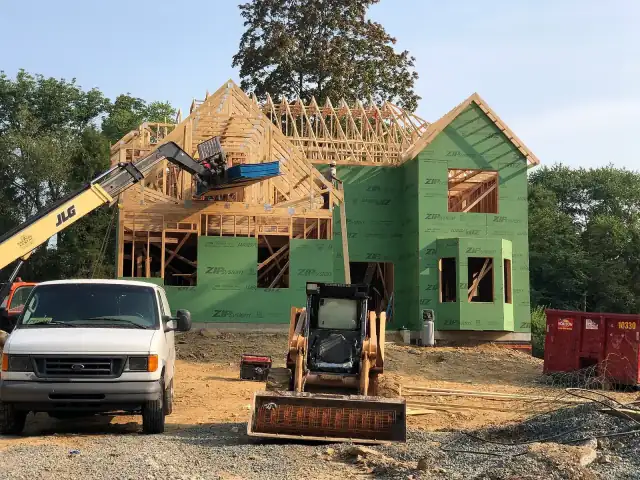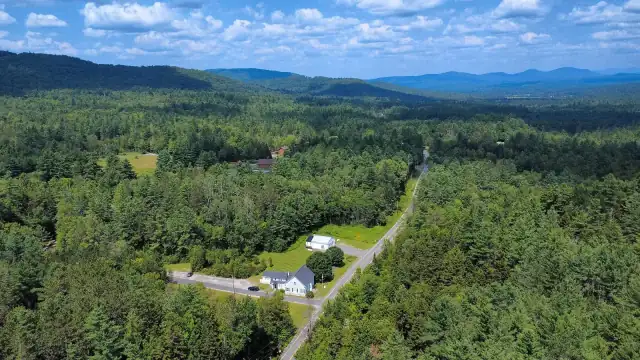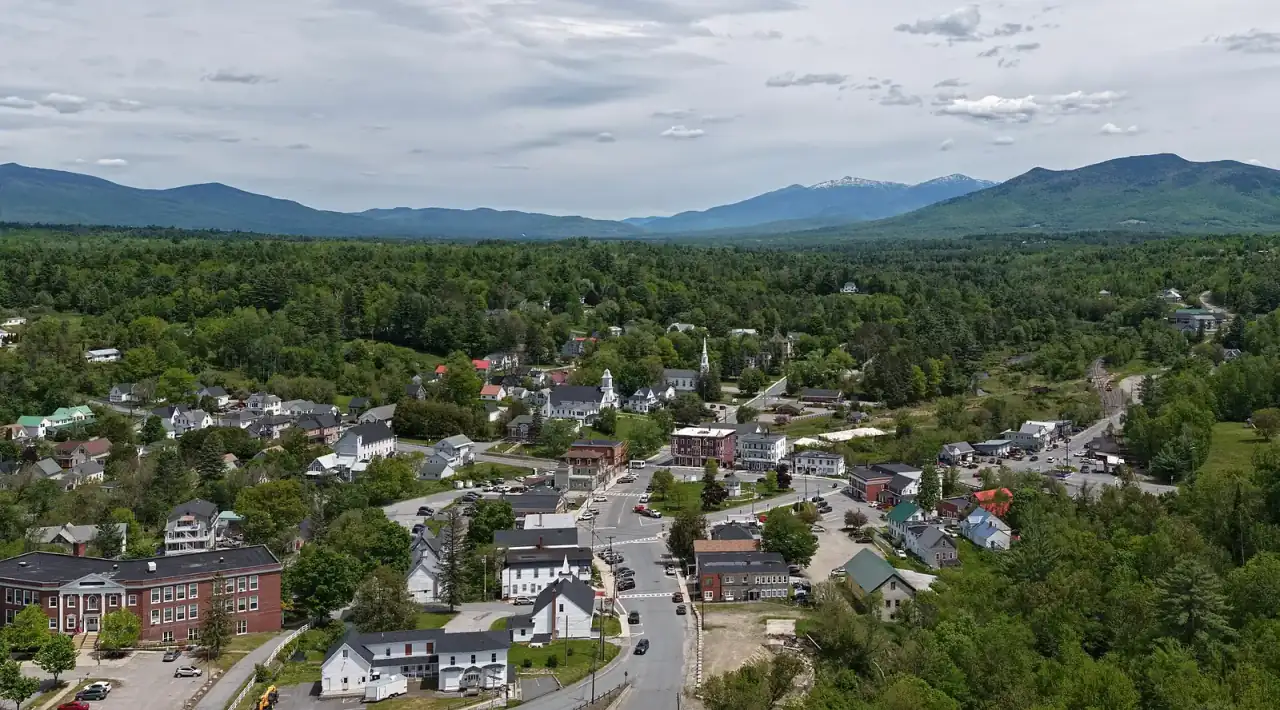
A construction loan in New Hampshire usually works as a one-time-close construction-to-permanent loan: you close once before the foundation goes in, the lender pays your builder in stages as work is inspected, you pay interest only on the money drawn for the 6 to 18 months of the build, and the loan then converts to a regular mortgage (St. Mary’s Bank, Members First Credit Union). NH lenders publish down payments from 5 percent to 20 percent, and land you already own can often count toward it (Bellwether Community Credit Union, Kennebunk Savings). The catch on a rural custom house is the appraisal: the loan is sized on what the finished house is worth, not on what it costs.
How does a construction-to-permanent loan work?
A construction loan pays for a house that doesn’t exist yet, so the money goes out in pieces and you pay interest only on what has gone out. A construction-permanent loan then converts to a standard amortizing mortgage when the house is finished (CFPB).
One-time close
You sign once, before construction, and lock the terms of the permanent mortgage up front. During the build you pay interest only on what has been disbursed; after completion the same loan becomes a principal-and-interest mortgage with no second closing (St. Mary’s Bank).
Fannie Mae, which buys many of these loans after they convert, sets the outer limits (Fannie Mae B5-3.1-02):
- No single construction period may run more than 12 months, and the total, with extensions, can’t exceed 18 months.
- Before conversion, the lender may modify only the interest rate, loan amount, loan term and a switch from adjustable to fixed. Increases in the loan amount must cover documented increases in construction cost.
- If the build runs longer than 18 months, the loan has to be handled as a two-closing transaction instead.
That 18-month ceiling matters in the Northeast, where contractor-built houses averaged 13.8 months from start to completion in 2025 (US Census Bureau). Our guide to how long it takes to build in New Hampshire breaks that down by phase.
Two-time close
You take a short-term construction loan first, then pay it off with a separate mortgage when the house is done. That means two sets of closing costs and requalifying at the end, but it gives you room to shop the permanent loan or borrow more if the project grew. Union Bank, which lends in northern Vermont and northern New Hampshire, describes its build loan as a twelve-month term with a possible four-month renewal (Union Bank).
| One-time close | Two-time close | |
|---|---|---|
| Closings | One, before construction | Two: construction loan, then mortgage |
| Permanent rate | Set at the start | Set when the house is done |
| Requalify at the end | No | Yes |
| If rates fall during the build | Ask whether the lender will modify the rate before conversion | You get the new rate |
| If the build runs long | Fannie Mae caps the construction period at 18 months total | Set by the construction lender’s extension terms |
How much down payment do you need for a construction loan in New Hampshire?
| Lender or program | Published minimum or maximum financing | Source |
|---|---|---|
| St. Mary’s Bank | Loan-to-value as high as 95%, so as little as 5% down for qualified borrowers | St. Mary’s Bank |
| Kennebunk Savings (NH and ME) | Down payment as low as 10%; up to 90% of the cost to build or the final appraised value, whichever is less | Kennebunk Savings |
| Bellwether Community Credit Union | 20% minimum down payment; land can be used as equity | Bellwether CCU |
| Members First Credit Union | Posted rate assumes 20% down and a 740 credit score | Members First rates |
| USDA single-close guaranteed loan | 100% financing for eligible incomes (up to 115% of area median) in eligible rural areas | USDA Rural Development |
| FHA one-time close | Same minimum investment as an FHA purchase, 3.5% of the adjusted value with a 580+ score (lender summary of HUD rules) | 719 Lending; HUD 4000.1 II.A.8.j |
Above 80 percent of cost or value, expect private mortgage insurance (Kennebunk Savings). Lenders also tend to want more cash in reserve on a construction loan than on a purchase, because there are more moving parts (Kennebunk Savings).
If the budget is bigger than the loan, the difference is collected at closing and held by the bank, and your money is spent first so you aren’t paying interest on borrowed funds sooner than you have to (Savings Bank of Walpole).
Can land you already own count toward the down payment?
Usually, yes, and for many North Country builders it is most of the down payment.
| Rule | Land owned | How the land is valued | Source |
|---|---|---|---|
| Fannie Mae single close | You own the lot before the first construction advance | Loan measured against the “as completed” appraised value of lot and house | Fannie Mae B5-3.1-02 |
| Fannie Mae single close | You buy the lot with the loan | Lesser of total cost (lot plus construction) or as-completed value | Same |
| FHA one-time close | More than 6 months, or received as a gift | Appraised value of the land | HUD 4000.1 II.A.8.j |
| FHA one-time close | 6 months or less | Lesser of cost or appraised value of the land | Same |
| Kennebunk Savings | More than a year | Current appraised value | Kennebunk Savings |
Here is how it works on paper. Say the lot you have owned for three years appraises at $100,000 and the house, site work and soft costs come to $550,000. The lender lends up to 80 percent of the as-completed value to avoid mortgage insurance.
| Appraisal at $650,000 | Appraisal at $600,000 | |
|---|---|---|
| Maximum loan at 80% | $520,000 | $480,000 |
| Construction cost to fund | $550,000 | $550,000 |
| Cash you bring | $30,000 | $70,000 |
Your land supplies most of the 20 percent equity in the first column. In the second, the appraisal comes in $50,000 lower and your cash requirement more than doubles, which is the common North Country problem.
How do land and lot loans work in New Hampshire?
A land loan, also called a lot loan, pays for vacant land before you are ready to build. Expect a bigger down payment, a shorter term and a higher rate than on a house. The reason is structural: Fannie Mae does not buy mortgages on vacant land or land development properties (Fannie Mae B2-3-01), so banks and credit unions keep land loans on their own books and set their own terms. Federal lending guidelines cap them at 65 percent of value for raw land and 75 percent for land development, against 85 percent for building a one- to four-family house (12 CFR 365, Appendix A). Lenders can, and often do, set lower limits.
What NH lenders publish for land loans (November 2026)
| Lender | Down payment or maximum loan | Term and posted rate | What the land must be | Source |
|---|---|---|---|---|
| Union Bank (northern VT and NH) | Often 25% to 40% down | Shorter terms and higher rates than a mortgage; no rate posted | Buildable lot or undeveloped land for future construction | Union Bank |
| Granite State Credit Union | Up to 80% of value on undeveloped land | 10-year loan from 8.000% (9.394% APR), adjustable after year 1; 15-year from 9.000% (10.159% APR), adjustable after year 3 | Buildable house lot with a perc test less than 3 years old | GSCU rates, Nov. 20, 2026 |
| St. Mary’s Bank | 20% minimum down | 1-year adjustable, 7.875% (7.708% APR) on 15-year payments; posted rates assume 40% down | NH, MA or ME property | St. Mary’s rates, Nov. 20, 2026 |
| Members First Credit Union | Posted rate assumes 20% down and a 740 score | 10-year land loan, 8.000% (8.447% APR) | Not stated on the rate page | Members First rates |
| Holy Rosary Credit Union | Up to 70% of value (30% down) | Up to 10 years; 11.865% (12.118% APR) on a 20-year payment schedule with a 10-year balloon | Approved buildable lot with an approved utility and septic design | HRCU, Nov. 20, 2026 |
| Partners Bank (ME and NH) | Up to 75% of value on buildable lots, 65% on raw land | 15-year fixed rate; no rate posted | The town must confirm the lot meets zoning and setbacks; no structures | Partners Bank |
Rates change daily and depend on credit, so treat the table as a range, not a quote. Several of these loans adjust after one to three years or end in a balloon payment, so read the terms past the first rate.
Raw land or a buildable lot?
Lenders price the risk of not being able to build. The NH lenders above either want proof the lot is buildable (a recent perc test, an approved septic design, or the town’s confirmation of zoning and setbacks) or charge more for raw land: Partners Bank asks 25 percent down on a buildable lot and 35 percent on raw land. In New Hampshire, “buildable” usually comes down to the septic: test pits and a state-approved design. Our guide to buying land to build on covers those checks, and site costs for septic, well and ledge covers what they cost.
Land loan first, or buy the land inside the construction loan?
If you are ready to build within months, with permits and a builder lined up, you may not need a land loan at all. Kennebunk Savings tells borrowers in that position to look at a construction loan instead, because it can finance the land and the house together (Kennebunk Savings), and Partners Bank also lets the land be bought as part of its construction loan (Partners Bank). Under Fannie Mae’s single-close rules, a lot bought with the loan is valued at the lesser of total cost or as-completed value (see the land table above).
If you are buying now and building in a year or more, a land loan holds the lot. When you build, the land loan is paid off by the construction loan, and the equity you have built in the land counts toward the down payment, as described in the section above. Partners Bank, for example, rolls land equity into its own construction loan.
A worked example: a $100,000 buildable lot with 25 percent down leaves a $75,000 loan.
| Posted terms | Payment per $1,000 | Monthly payment on $75,000 |
|---|---|---|
| Granite State CU, 10-year, 8.000% (first 12 months) | $12.13 | about $910 |
| St. Mary’s Bank, 15-year schedule, 7.875% (first 12 months) | $9.48 | about $711 |
That payment usually runs on top of your rent or current mortgage, and it doesn’t include property taxes. If the land is enrolled in current use, building on it later triggers the land use change tax; the land guide explains how that works.
Will a custom house in rural New Hampshire appraise for what it costs?
Often not. A broker covering Grafton, Belknap and Carroll counties writes that the appraisal on a new custom home in a rural town frequently comes in under cost, because there are few new-construction sales to support it, and calls that the most common reason a construction loan gets resized late (Owl’s Nest Real Estate). One Vermont commenter on Reddit put it bluntly: banks lend on the finished value, not on your cost (r/vermont, July 2022).
The appraiser works from your plans and specifications before construction, and lenders send the appraiser back for a final inspection at completion (Savings Bank of Walpole). Ways to limit the damage:
- Get a lender’s read early, on a near-final plan, before you sign a builder contract.
- Spend where appraisers give credit. Finished square footage, bedrooms and baths count. Complex roofs and premium details may not.
- Keep cash outside the loan for the gap. Our cost guide suggests a 10 to 15 percent contingency.
- Expect timber frames and modular houses to face the same comparable-sales problem; see timber frame vs. stick built.
How do construction loan draws and inspections work?
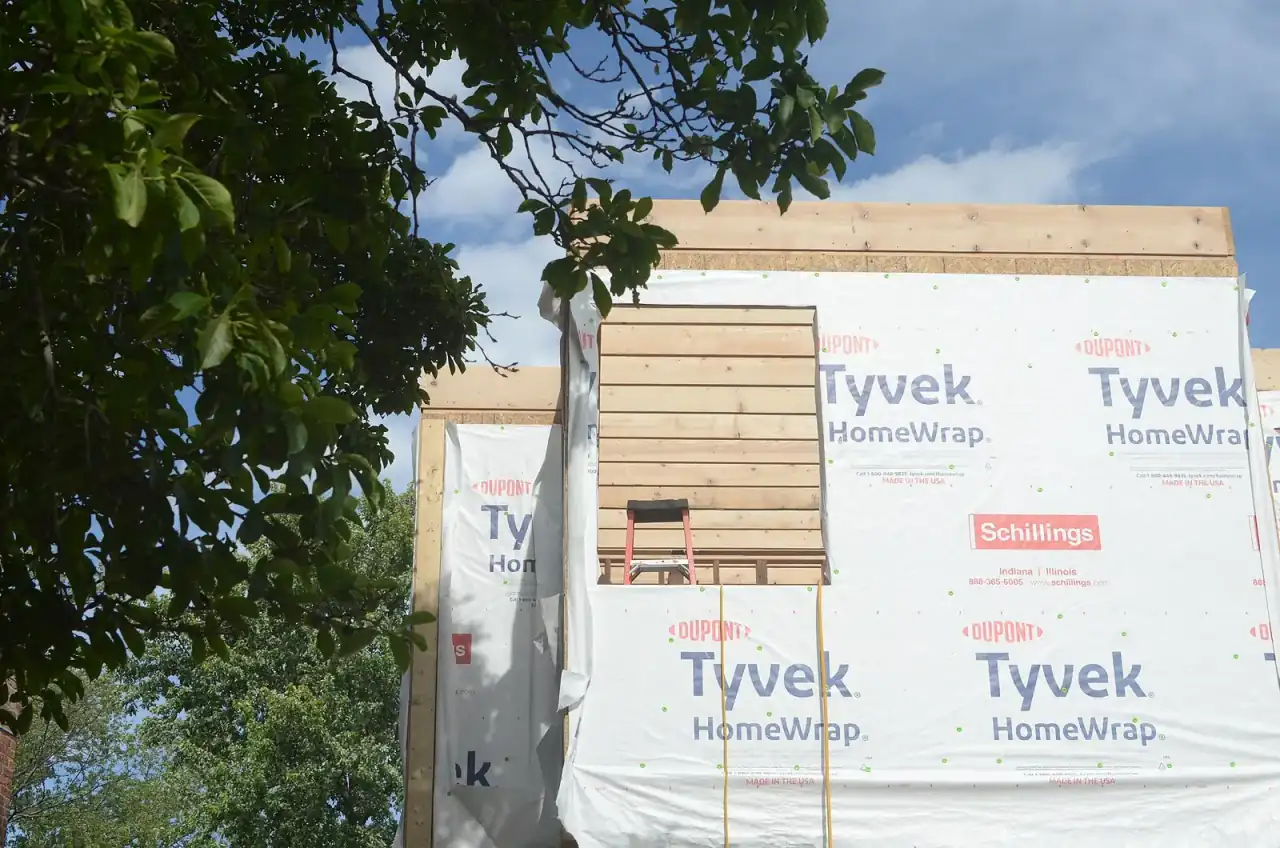
The lender holds the loan money and releases it in draws, each tied to a stage of construction: foundation, framing, roof, mechanicals and interior finishes. Before each draw an inspector checks that the work matches the approved plans (St. Mary’s Bank).
| How it works | What one lender or program publishes |
|---|---|
| Who inspects | Savings Bank of Walpole uses its own staff; its construction loan fee covers the first eight inspections, then one a month (SBW brochure, rev. 1/24) |
| Contingency | Generally 5% with a general contractor, 10% if you act as your own GC (SBW) |
| Deposits to the builder | SBW “highly discourage[s]” deposits before construction and pays only for completed work |
| Change orders | Costs beyond the original contract are the borrower’s responsibility (St. Mary’s Bank) |
| Invoice-based draws | Union Bank pays contractors from submitted invoices, usually within 24 to 48 hours, with no minimum draw size (Union Bank) |
| Paperwork per draw (USDA) | Third-party inspection, a signed conditional lien waiver from the builder and a title insurance endorsement (USDA HB-1-3555, ch. 12) |
| Final draw | Released after the final appraisal inspection and the certificate of occupancy, if the town issues one (SBW) |
Why New Hampshire lenders care about lien waivers
Under RSA 447:9, a contractor’s or supplier’s lien for labor and materials lasts 120 days after the work or materials are furnished and “shall take precedence of all prior claims except liens on account of taxes.” In plain terms, an unpaid lumber yard can end up ahead of your mortgage. That is why lenders collect lien waivers and update title as they pay, and why you should ask each lender exactly what it collects with every draw (My Construction Path).
Not every town issues a certificate of occupancy. If yours doesn’t, ask early what the lender will accept for the final draw. Our building permits guide covers which towns do.
What will you pay while the house is being built?
Interest only, on the amount drawn so far (Members First, St. Mary’s Bank). The payment starts small and climbs with each draw.
Federal disclosure rules give a simple way to estimate the total: assume half the loan is outstanding for the whole construction period (12 CFR Part 1026, Appendix D). For a $480,000 loan at 7.75 percent over a 12-month build:
- Estimated interest: $480,000 × 0.5 × 7.75% = $18,600 for the year, about $1,550 a month on average.
- Last month, with the full amount drawn: $480,000 × 7.75% ÷ 12 = $3,100.
- After conversion to a 30-year loan at 7.75%, principal and interest run about $7.16 per $1,000 borrowed (Members First): 480 × $7.16 = $3,437 a month, before taxes and insurance.
Most people building are also paying rent or a current mortgage during those months. Budget both.
How long is the interest-only period?
| Lender | Construction period | Source |
|---|---|---|
| Members First Credit Union | 6 months, fixed rate, interest only; tax and insurance escrows not available on this product | Members First |
| Kennebunk Savings | 6, 9 or 12 months | Kennebunk Savings |
| Bellwether CCU | 12 months | Bellwether CCU |
| Savings Bank of Walpole | 12 months | SBW |
| Union Bank | 12-month build loan, possible 4-month renewal | Union Bank |
| St. Mary’s Bank | Up to 18 months on its product page; up to 12 months in a May 2026 article | Product page; article |
St. Mary’s two pages disagree, so ask. A 6-month draw period is tight for a custom house in the North Country, where the foundation often waits for frost and spring road postings. Ask what an extension costs before you sign.
What are construction loan rates in New Hampshire in November 2026?
High, and construction loans usually price a little above regular mortgages.
| Rate | Figure | Source |
|---|---|---|
| Freddie Mac 30-year fixed, national average | 7.11% on Nov. 12, 2026 (6.24% a year earlier) | Freddie Mac PMMS |
| Freddie Mac 15-year fixed | 6.45% | Same |
| Members First, 30-year conventional | 7.500% (7.699% APR), Nov. 16, 2026 | Members First |
| Members First, 30-year construction-to-permanent | 7.750% (7.999% APR) | Same |
| Members First, 10-year land loan | 8.000% (8.447% APR) | Same |
| Federal funds target | 3.75% to 4%, held Oct. 28, 2026; two officials voted for an increase | Federal Reserve |
The Fed had raised its target by a quarter point in September (CNBC). NAHB’s chief economist said on November 17 that mortgage rates above 7 percent are holding buyers back (NAHB).
What that means for a build: a one-time close locks your permanent rate before you dig, which protects you if rates rise during construction. If rates fall, Fannie Mae allows the rate to be modified before conversion, but whether your lender offers that is its choice, so ask (Fannie Mae). Under FHA’s one-time close, the rate may float during construction within a written range and cap, and you are qualified at the maximum (HUD 4000.1 II.A.8.j).
Which New Hampshire lenders publish construction loan terms?
These lenders post terms online. We list them for comparison, not as recommendations, and terms change. Call two or three, including one with an office near your lot, and compare Loan Estimates for the same project.
| Lender | Where | What it publishes |
|---|---|---|
| Union Bank | Northern Vermont and northern New Hampshire | Build loans for 1 to 4 family homes; 12-month term with possible 4-month renewal; borrowers with suitable experience can act as GC; lot must have water and wastewater engineering, public road frontage, power and permits |
| Bar Harbor Bank & Trust | Absorbed Woodsville Guaranty Savings Bank on August 1, 2025 (SEC filing); lists a northern NH mortgage originator based in Littleton (Bar Harbor) | Offers construction loans; no terms posted |
| St. Mary’s Bank | Manchester; NH properties only | One closing; up to 95% LTV; about 60 days to close |
| Members First Credit Union | Manchester | One closing; 6-month draw period; rates posted online |
| Bellwether Community Credit Union | Manchester, Nashua, Bedford, Pelham | Single close; 20% down; builder approval required; stick-built or modular |
| Kennebunk Savings | New Hampshire and Maine | Single close; as little as 10% down; gifted land counts as equity |
| Savings Bank of Walpole | Walpole, NH | Single close; GC must be approved by the bank |
Southern NH lenders don’t always lend in the North Country, and credit unions have membership rules, so ask before you apply. For a USDA single-close loan, USDA keeps a list of participating lenders on its program page.
Can you be your own general contractor on a construction loan?
It is harder. New Hampshire doesn’t license general contractors (My Construction Path; see our guide to choosing a builder), so lenders do their own vetting.
| Program or lender | Owner-builder rule |
|---|---|
| USDA single close | Owner-builders ineligible; builder needs 2+ years of experience, any license state or local law requires, $500,000 general liability insurance and a fixed-price contract (USDA HB-1-3555, ch. 12) |
| FHA one-time close | Builder must be a licensed general contractor; you may act as GC only if you are one (HUD 4000.1 II.A.8.j). Ask your lender how it applies this in a state with no GC license |
| Union Bank | Borrowers with suitable experience may act as GC or do the work (Union Bank) |
| Savings Bank of Walpole | Allowed in special cases, with a 10% contingency instead of 5% (SBW) |
One New Hampshire owner-builder, writing on Reddit about a house he built in the southern part of the state in 1998, said finding a bank to make a one-year owner-builder construction loan and roll it into a mortgage was the hard part (r/newhampshire, 2016). Time is a cost too: owner-built houses in the Northeast took 14.5 months on average from start to completion in 2025, against 13.8 for contractor-built (Census).
Does New Hampshire Housing have a construction loan?
We found no construction loan program from New Hampshire Housing (NHHFA). Its Home Preferred program lists its purposes as purchase of a primary residence and limited cash-out refinances of loans that NH Housing originated (Home Preferred fact sheet). Home Flex covers purchase or rate-and-term refinance of a primary residence with an FHA, VA or USDA loan (Home Flex fact sheet). Its document checklist asks for a certificate of occupancy on new homes, so a finished new house can qualify (Home Preferred stacking list).
If you are buying a finished new home: income limits reach $184,500, cash assistance of up to $15,000 comes as a 0% second mortgage, and homebuyer education is required (NH Housing). Both programs require a 620 minimum credit score, the well and septic on the property being financed and a water test on a private well for purchases (fact sheets).
If you are building on your own land with a two-time close, ask a participating lender whether a Home Flex rate-and-term refinance can serve as the permanent loan. We could not confirm that it can.
What documents do you need for a construction loan?
Lenders differ, but this is the usual list, drawn from Kennebunk Savings’ construction checklist, a Grafton-area broker and USDA’s rules (Kennebunk checklist, Owl’s Nest, USDA):
About you:
- W-2s for two years and a recent pay stub; two years of signed tax returns if self-employed
- Two months of statements for bank, retirement and investment accounts
- List of debts with balances and payments; current mortgage or landlord details
About the builder and the house:
- Signed construction contract (a fixed-price contract for USDA)
- Full set of construction plans
- Specifications for materials and finishes
- Line-item construction budget and draw schedule
- Builder’s insurance certificates, references and, where the lender asks, a builder application
About the land:
- Deed, or purchase and sale agreement and closing statement if you are buying
- Survey and site plan
- NHDES septic Approval for Construction
- Driveway permit from the town or NHDOT
- Building permit (required before closing at Kennebunk)
Before closing:
- Builder’s risk and homeowners insurance policies
- Appraisal, ordered by the lender from your plans and specifications
Lenders want the lot ready on paper before they lend; on a raw North Country lot, that is months of work. Our guide to buying land covers it.
What mistakes cost money on a construction loan?
- Paying the builder a big deposit before closing. Lenders discourage it and pay for completed work only.
- Assuming the appraisal will match the cost. Get the number early and hold cash for a gap.
- Choosing a draw period shorter than the build. Six months is rarely enough for a custom house that starts after mud season.
- Making changes mid-build. Change orders come out of your pocket, not the loan.
- Skipping lien waivers. NH lien law puts unpaid subs and suppliers ahead of prior claims for 120 days.
- Shopping the rate alone. Compare construction fees, inspection costs, extension fees and whether the lender lets you lower the rate before conversion.
Where should you start?
Talk to a lender before you finalize the plans, so the design, budget and appraisal line up. If you are building around Littleton, Franconia, Bethlehem or Sugar Hill, Fregeau Builders can talk through the budget and paperwork a lender will want for a custom home. Contact us when you are ready to price your lot.
Sources
- St. Mary’s Bank: Construction-to-Permanent Mortgage Loans (accessed November 2026)
- St. Mary’s Bank: Why Building a Home in New Hampshire Could Be a Better Option (May 18, 2026) (accessed November 2026)
- Members First Credit Union: Construction Loan (accessed November 2026)
- Members First Credit Union: Mortgage Rates (effective Nov. 16, 2026) (accessed November 2026)
- Bellwether Community Credit Union: Home Construction Loan (accessed November 2026)
- Kennebunk Savings: Construction Loan Lender in NH and ME (accessed November 2026)
- Kennebunk Savings: What Is Required for a Construction Loan? (accessed November 2026)
- Kennebunk Savings: Mortgage and Construction Loan Application Checklists (accessed November 2026)
- Savings Bank of Walpole: Home Construction Loans brochure (rev. 1/24) (accessed November 2026)
- Union Bank: Build/Construction Loans and Land Financing (accessed November 2026)
- Bar Harbor Bank & Trust: Home Mortgages (accessed November 2026)
- Bar Harbor Bank & Trust: Northern New Hampshire mortgage originator page (Littleton office) (accessed November 2026)
- Bar Harbor Bankshares: Third Quarter 2025 Results, SEC Exhibit 99.1 (Oct. 21, 2025) (accessed November 2026)
- Fannie Mae Selling Guide B5-3.1-02: Conversion of Construction-to-Permanent Financing, Single-Closing Transactions (May 6, 2026) (accessed November 2026)
- HUD Handbook 4000.1 II.A.8.j, Construction to Permanent, via Zeitro (accessed November 2026)
- 719 Lending: FHA Construction Loans, One-Time-Close Requirements and Down Payment (July 10, 2026) (accessed November 2026)
- USDA Rural Development: Single Family Housing Guaranteed Loan Program (accessed November 2026)
- USDA Rural Development: HB-1-3555 Chapter 12, Property and Appraisal (single-close loans) (accessed November 2026)
- CFPB: TILA-RESPA Integrated Disclosures for Construction Loans (accessed November 2026)
- eCFR: 12 CFR Part 1026, Appendix D, Multiple Advance Construction Loans (accessed November 2026)
- NH General Court: RSA 447:9, Duration (of liens for labor and materials) (accessed November 2026)
- My Construction Path: New Hampshire Construction-to-Permanent Lender Guide (Nov. 3, 2026) (accessed November 2026)
- Owl’s Nest Real Estate: Building a New Home in New Hampshire (updated Nov. 12, 2026) (accessed November 2026)
- US Census Bureau: New Residential Construction, Length of Time tables (2025) (accessed November 2026)
- Freddie Mac: Primary Mortgage Market Survey (Nov. 12, 2026) (accessed November 2026)
- Federal Reserve: FOMC Statement (Oct. 28, 2026) (accessed November 2026)
- CNBC: Fed holds rates steady despite concerns over inflation (Oct. 28, 2026) (accessed November 2026)
- NAHB: Builder Sentiment Continues to Fall on Affordability Concerns (Nov. 17, 2026) (accessed November 2026)
- New Hampshire Housing: Home Preferred and Preferred Plus Fact Sheet (Apr. 9, 2026) (accessed November 2026)
- New Hampshire Housing: Home Flex and Flex Plus Fact Sheet (Oct. 1, 2026) (accessed November 2026)
- New Hampshire Housing: Home Preferred Stacking List (accessed November 2026)
- New Hampshire Housing: Mortgage Programs (accessed November 2026)
- Reddit r/vermont: How Much Does it Cost to Build a House in Vermont? (July 2022) (accessed November 2026)
- Reddit r/newhampshire: Anyone have experience building their own house in NH? (Feb. 2016) (accessed November 2026)
- Fannie Mae Selling Guide B2-3-01: General Property Eligibility (accessed November 2026)
- eCFR: 12 CFR Part 365, Subpart A, Appendix A, Interagency Guidelines for Real Estate Lending Policies (accessed November 2026)
- Union Bank: Land Loans (accessed November 2026)
- Granite State Credit Union: Mortgage Rates (effective Nov. 20, 2026) (accessed November 2026)
- St. Mary’s Bank: Mortgage Rates (Nov. 20, 2026) (accessed November 2026)
- Holy Rosary Credit Union: Mortgages and Home Loans (land loan rates, Nov. 20, 2026) (accessed November 2026)
- Partners Bank: Land and Construction Loans in Maine and New Hampshire (accessed November 2026)
- Kennebunk Savings: Land Loans in NH and ME (accessed November 2026)